2026-10-04 ·
diy vs pro flood repair miami homeowner advice
# diy vs pro flood repair miami homeowner advice
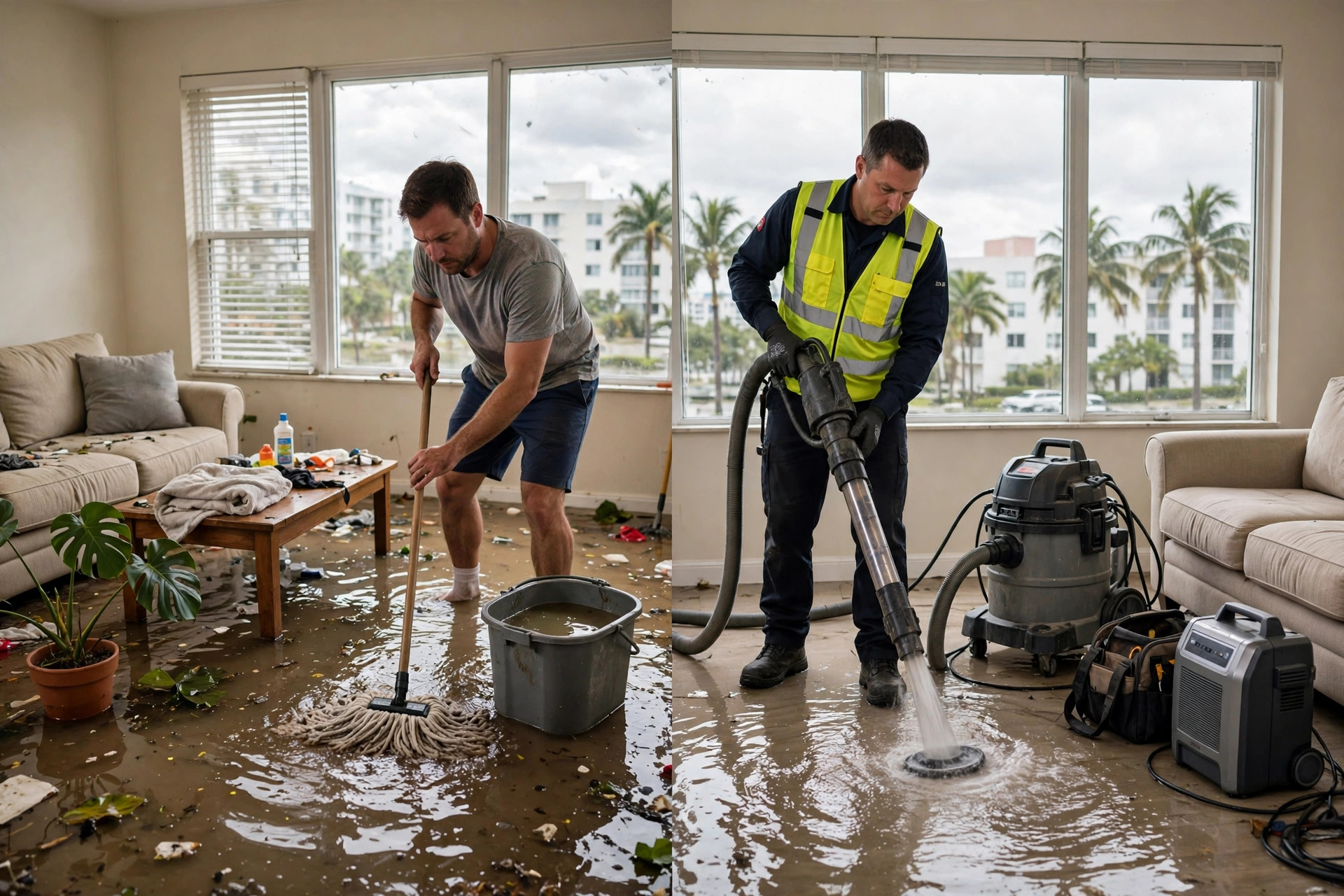
Direct answer: for small clean water incidents you can often handle extraction and drying yourself for under $200–$800 and in 24–72 hours, but if floodwater is from storms, sewage, structural leaks, rising groundwater, or if materials stayed wet longer than 48–72 hours, hire a pro — professional work typically starts around $1,200 for modest residential jobs and can be much higher for large or contaminated losses. This post explains the practical difference between homeowner and professional responses in Miami-Dade County, how the tropical monsoon climate and typical local construction change priorities, and clear, local next steps that protect your home and health.
Why Miami’s climate and housing stock change the DIY vs pro decision
Miami’s hot, humid, tropical monsoon climate accelerates mold growth and material degradation, so time matters more here than in cooler places. In neighborhoods like Downtown Miami, Brickell, and the Design District many buildings are high-rise concrete or mixed concrete/steel with carpeted units; in Coconut Grove, Coral Gables, and Little Havana you’ll find older plaster, hardwoods, and masonry where salt air and age affect drying and rot. Rising humidity after summer thunderstorms or during hurricane season keeps relative humidity high indoors, so a carpet left wet in Brickell or Wynwood will mold faster than the same event in a dry climate.
So if water sits more than 48–72 hours, or the source is storm surge, sewer backup, or groundwater (common near Bayside Marketplace and low-lying Overtown pockets), you should treat the event as high risk and call professionals. For slow leaks in a single room with clear water, a careful DIY approach can work; for any contamination or building envelope breach, pros protect adjacent units and handle containment, drying, and mold control the right way.
Signs DIY cleanup is reasonable (and exactly what to do)
You can reasonably DIY when all these are true: water is clean (toilet-sourced or graywater is a no), damage is contained to a single, small room, materials are non-porous or replaceable, and you can start within 12–24 hours. Steps to follow:
- Stop the source and shut off power to affected rooms before entering flooded areas. If unsure, cut the breaker.
- Remove standing water with a shop vacuum or submersible pump; remove as much standing water as possible within 24 hours.
- Remove wet porous materials: soaked carpet padding, saturated drywall below the flood line, and absorbent insulation. Bag and dispose of them promptly.
- Set up high-capacity fans and a dehumidifier rated for the room size; in Miami’s humidity you’ll need to run dehumidification continuously until readings are below 50% RH and materials reach safe moisture content.
- Clean non-porous surfaces with detergent and a light chlorine solution if contamination is suspected; rinse and dry.
DIY fails when you can’t get materials fully dry, detect warped structural members, or find visible microbial growth. If any of those appear, escalate to pros.
When to call a pro and what professionals handle in Miami
Call a professional if you see sewage, storm surge, standing water over 1 inch combined with contamination, structural damage, or mold visible on walls and ceilings. Pros handle: emergency extraction, controlled demolition, structural drying with industrial dehumidifiers and air movers, moisture mapping, and safe disposal of contaminated contents. In Miami-Dade County, professionals also account for multi-unit buildings: drying an upstairs unit in Coral Gables or Brickell requires containment to protect adjacent condos and to document work for building management and insurers.
Professionals can also address challenges unique to Miami: salt-corrosion on metal framing, crawlspace groundwater issues near Biscayne Bay, and rapid mold colonization during the wet season. If you suspect mold after a flood, see services like emergency mold remediation after floods in miami homes for containment and remediation protocols that are hard to replicate safely as a homeowner.
Costs, timelines, and what affects price in Miami neighborhoods
Cost depends on contamination level, materials affected, access, and humidity-driven drying time. Typical factors that raise costs in Miami include multi-unit logistics (high-rises in Brickell or Downtown Miami), saltwater intrusion from storm surge (common near Bayside Marketplace and Miami Beach), and older finishes in Coral Gables or Little Havana that require careful restoration rather than simple replacement.
Expect these rough timelines: extraction in a few hours, structural drying 3–7 days for small to medium jobs with industrial equipment, and larger or contaminated jobs 1–3 weeks. Costs can range from DIY under $800 (materials and rental equipment) to professional minimums starting around $1,200 for small clean-water jobs; sewage or storm-surge events with pack-out and reconstruction can be much higher. For a more detailed local cost guide see our piece on water damage restoration costs in miami 2026.
Practical checklist and next steps for Miami homeowners after a flood
- Safety first: do not enter flooded rooms with live electrical circuits. If flooding looks severe, leave the building and call emergency services.
- Document damage with photos and notes before you remove items; document date/time and the source of water.
- Start extraction immediately if water is clean and limited; otherwise call pros listed under emergency water restoration or local flood restoration services.
- If you live in a condo building in Brickell, Downtown Miami or Coral Gables, notify building management early — water can travel between units and the building may have protocols.
- If mold appears or you smell persistent mustiness after drying, follow up with professional remediation; read more on preventing seasonal flood damage in our guide preventing flood damage in miami rainy season.
Closing practical note: we operate Mon–Fri 8am–6pm, Sat 9am–2pm for consultations and support. When in doubt after a flood in Miami, early professional assessment saves money and prevents long-term mold and structural problems—especially in a humid, coastal place like Miami-Dade County where conditions favor rapid deterioration.