2026-10-04 ·
preventing flood damage in miami rainy season
# preventing flood damage in miami rainy season
The short answer: proactive measures cut the chance of major water intrusion by more than half on many properties—prioritize clearing drains, sealing low openings, and installing or testing backflow prevention and door thresholds before the first heavy rains; plan to spend from $400–$2,500 on targeted preventative work for a typical single-family house in Miami, and $150–$600 for basic condo prep. These numbers reflect common costs in Miami-Dade neighborhoods where older housing stock and coastal exposure make small investments yield big reductions in repair needs. Read on for exactly what to inspect, what to budget for, and how local climate and neighborhood conditions change the work on the ground.
Understand why Miami is different: climate, homes, and flood paths
Miami’s tropical monsoon climate brings concentrated heavy rains in summer and fall, and short windows of intense downpours that overload gutters and street drains. In Downtown Miami, Brickell, and the Design District you’ll often be dealing with high-rise lobbies and parking garages where water follows building utilities and elevator pits; in Coconut Grove, Coral Gables, Little Havana and Overtown you’ll usually see older masonry and clay-tile roofs or historic wood floors that wick moisture differently. Miami-Dade County terrain is flat, with low elevation in parts of Miami Beach and near Bayside Marketplace, so stormwater can pool for hours after heavy rain. Another local factor: tidal surge and king tides can raise street-level drainage basins, reversing flow into properties and sewers; this is why many owners near Marlins Park or the waterfront around Vizcaya Museum take extra steps. Practical prevention varies: for condos, lobby thresholds and garage ramp seals are critical; for single-family homes, grading, gutter capacity, and door sills matter most. Expect maintenance tasks to recur: clean gutters and downspouts every 2–3 months during the wet season and check seals after any major storm.
Concrete steps to prevent flood entry (inspection checklist and short-term fixes)
Start with a local-focused inspection and prioritize these actions by impact and cost:
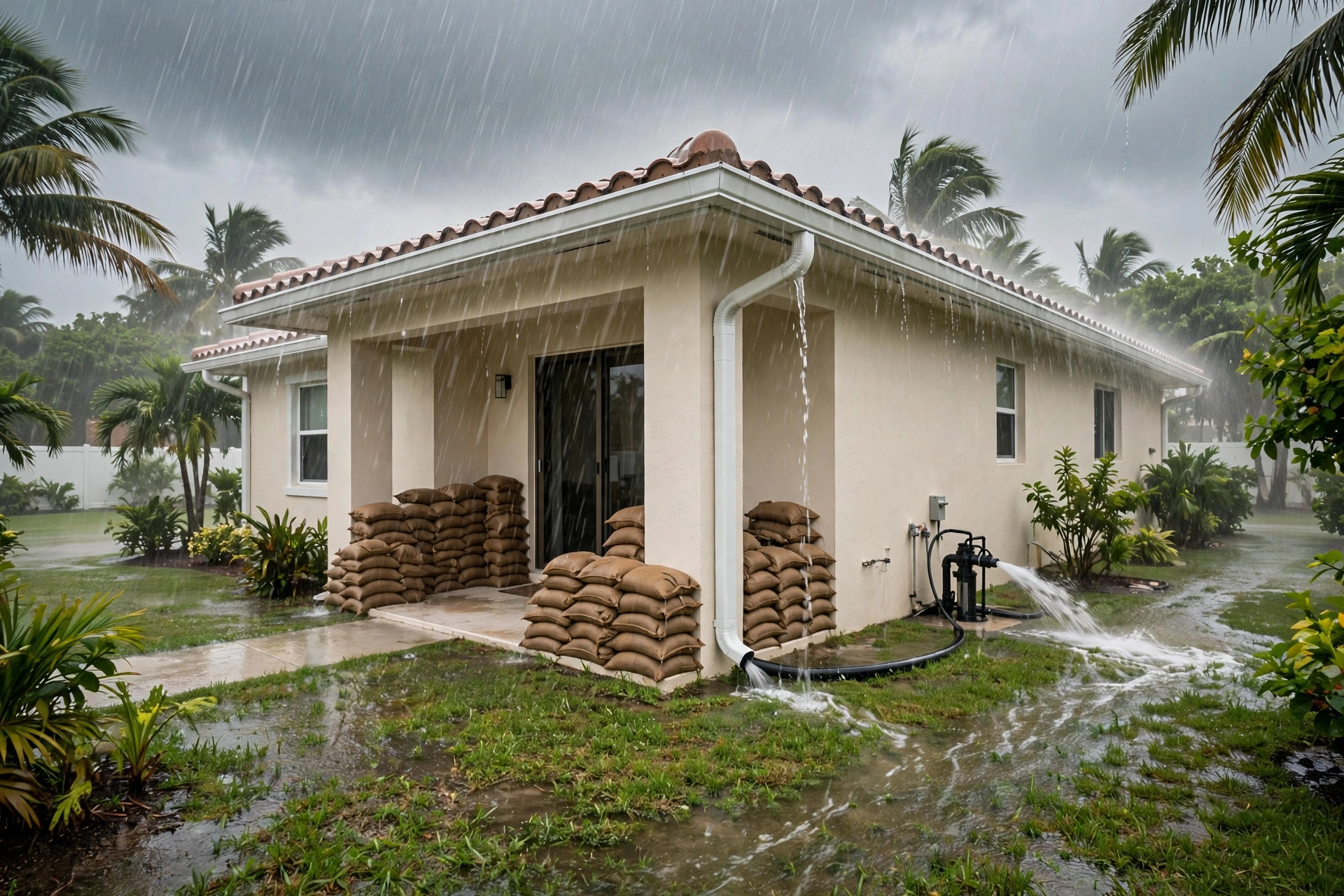
- Roof and gutters: clear debris, repair loose flashing, and ensure downspouts discharge at least 6–10 ft from foundations. Gutters clogged from mahogany or ficus leaves in Coconut Grove and Coral Gables are a common source of overflow.
- Exterior openings: install or replace door thresholds and weatherstripping where water has entered before, especially on first-floor units in Little Havana and Overtown. Use temporary sandbags or water-filled berms only as last-minute measures.
- Grading and drainage: regrade soil away from foundations and install splash blocks or short PVC extenders on downspouts to prevent standing water near slabs in older Miami homes.
- Garage and parking: seal garage floor seams and raise storage off the slab; cars in Brickell-area parking garages experience flooding when street drains back up during heavy rains.
- Window wells and vents: clear debris and add screens or covers to prevent gutter overflow from dumping into basement-like spaces or crawlspaces.
- Door and valve checks: test backflow prevention devices and main shutoffs before the rainy season; in many Miami properties a failing exterior valve lets street water enter service penetrations.
Most of these fixes cost unde
Long-term upgrades and cost considerations for Miami properties
For homeowners and HOAs looking to reduce flood risk over years rather than weeks, consider these investments and how local conditions shape them:
- Preventive waterproofing: improving exterior walls, raising electrical panels, and sealing slab joints helps in neighborhoods with frequent surface flooding; see preventive waterproofing for Miami homes for specific retrofit ideas and materials. Typical projects range from $1,200–$12,000 depending on scope and whether you need exterior excavation.
- Backflow and sump solutions: installing a check valve or a dedicated sump pump with battery backup is critical where sewer backups happen after heavy rains and king tides. Battery-backed pumps are essential in parts of Miami prone to power loss during storms. Budget $600–$2,500 depending on pump size and installation complexity.
- Structural choices for coastal properties: if you’re near Biscayne Bay or facing tidal influence, prioritize raised electrical work and consider flood vents for crawlspaces; these reduce long-term mold and rot risks common after Miami floods.
- Content and finish-floor selection: for areas like Wynwood and Little Havana where humidity spikes after storms, replace drywall with cement board up to known flood heights and choose ceramic tile or sealed concrete for first-floor finishes to
Controlling mold after water intrusion and where to get help in Miami
If water does enter a property, speed is everything for mold prevention. In Miami’s hot, humid climate mold can begin to grow within 24–48 hours on wet organic materials. Immediate steps include removing saturated carpeting and drywall below the wet line, increasing airflow with portable fans and dehumidifiers, and isolating affected spaces to reduce spore spread into clean areas. For flooded condos and homes, hire a team experienced with Miami conditions—building materials here often retain moisture longer, and mold species common in South Florida thrive in warm, damp environments. For professional response, consider services that specifically handle post-flood mold work such as emergency mold remediation after floods in Miami homes and structural drying services using industrial dehumidifiers; those pages explain protocols and typical equipment used in Miami-Dade County. Also review our local guidance on hurricane prep for water damage to align seasonal prevention with post-event cleanup steps. Final note: document damage with photos before cleanup for insurance and track disposal of heavily contaminated porous items.
Practical close: a seasonal plan you can follow this month
Create a simple seasonal checklist tailored to your location: if you’re in Brickell or Downtown Miami prioritize lobby/garage thresholds and elevator pit inspections; if you’re in Coral Gables or Coconut Grove focus on gutters, roof flashing, and tree trimming; in Little Havana and Overtown emphasize door seals and grading near foundations. Monthly during June–November: clear gutters, test sump and backflow devices, check weatherstripping, and move valuables off the floor. Keep contact info for emergency extraction and mold teams handy—services like 24/7 water extraction and flood damage restoration are crucial when quick response matters. Finally, schedule preventive work early in the season to avoid contractor backlogs: many property managers in Miami-Dade call for preventive waterproofing and structural drying services well before peak storms. Our business hours are Mon–Fri 8am–6pm, Sat 9am–2pm for scheduling inspections and follow-ups.