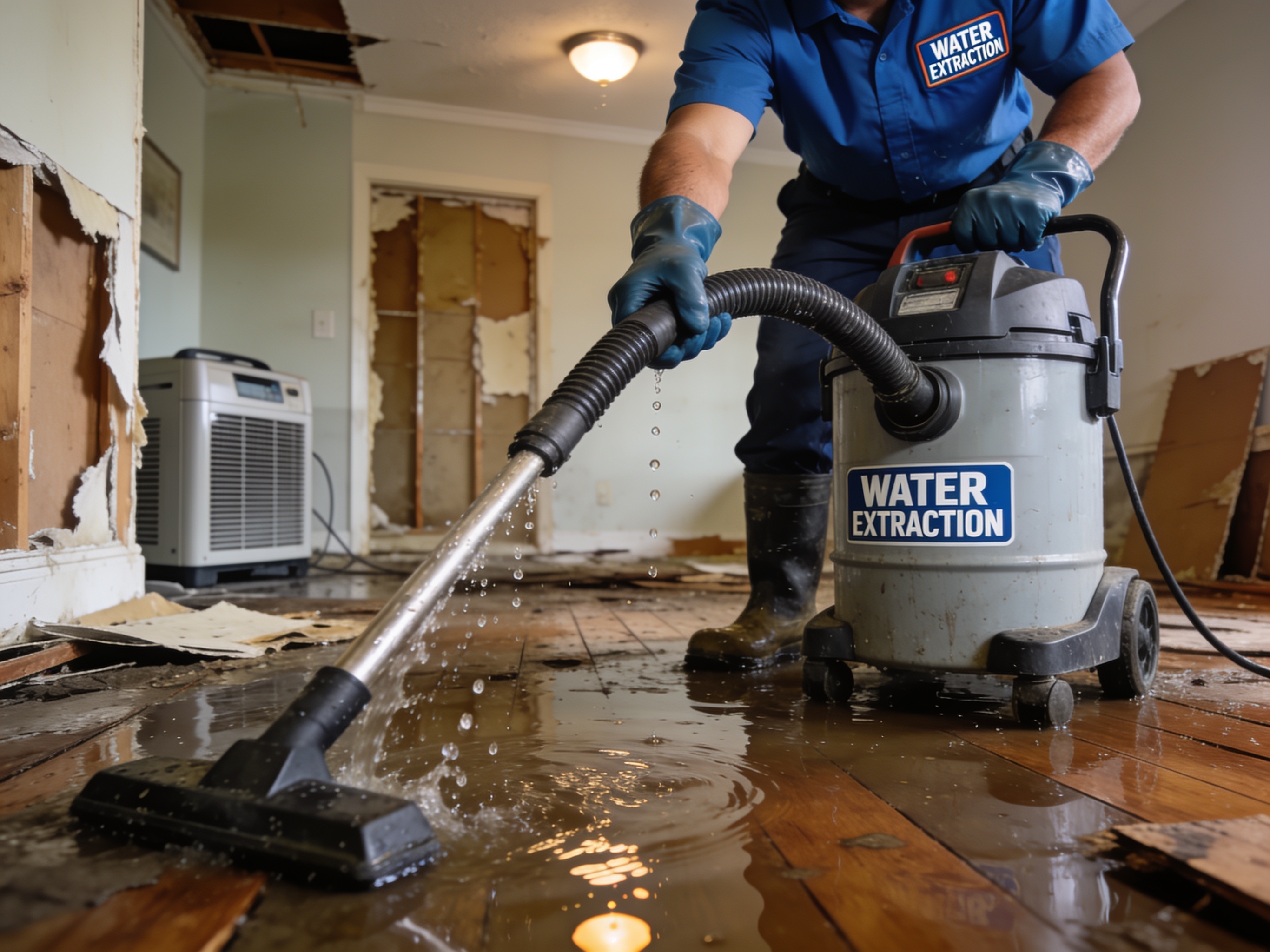
Flooding and major leaks in Miami present unique challenges. High-rises in Brickell and Downtown Miami mean vertical extraction and fast drying of carpeted units on stacked floors; pumps, negative air setups and coordination with building engineers are often required to protect common areas and lower units. In older single-family homes in Coconut Grove or Little Havana we commonly encounter slab-on-grade concrete, tile floors, and block construction where water can wick into perimeter walls and beneath tile grout. Rapid extraction within hours is critical here to stop salt-laden groundwater and humid tropical air from accelerating corrosion, staining, and secondary microbial growth.
The tropical monsoon climate with hot, wet summers drives fast mold colonization; a 24–48 hour delay can turn clear standing water into a mold containment project. In Wynwood and the Design District, warehouses and retail spaces often have porous art-friendly wall surfaces and layered floor coverings that hide moisture pockets; we use moisture mapping and thermal imaging to find entrapped water behind drywall, built-in displays, and under finished concrete. At properties near Bayside Marketplace, Vizcaya Museum, or Marlins Park, tidal surge and storm runoff bring different contaminants—chlorides and organics—that change drying strategies and require more aggressive material removal and sanitization to prevent long-term deterioration.
Practical details matter: access on narrow Overtown streets, parking at busy Coral Gables blocks, or elevator waits at Miami Beach condominiums all affect how fast equipment can go in and out. We stage portable trash pumps and truck-mounted extraction units where permitted, and when slab penetration is needed we coordinate with structural constraints common in Miami-Dade County construction. Our emergency response balances extraction speed with careful drying: over-aggressive heat in humid conditions can trap moisture in assemblies, so we pair dehumidification and airflow placement with ongoing moisture monitoring until readings are stable and safe for restoration. Regular office hours are Mon–Fri 8am–6pm and Sat 9am–2pm; emergency line is handled 24/7 for extraction dispatch.
Technician insight
In Miami the thing that catches most people out with 24/7 emergency water extraction is the combination of high humidity and older block construction. Water wicking into concrete block and under tile during the wet season hides moisture for days, and without moisture mapping you’ll think a room is dry when assemblies still hold water—this is what leads to mold growth after the initial cleanup.
Ground-floor apartment flooded after heavy summer storm
Problem → A ground-floor unit near Vizcaya Museum took two inches of stormwater after a tropical downpour that entered through a courtyard drain. What we found → Water had migrated under tile into the slab and the base of block walls and contained organic debris. What we did → We pumped standing water, removed affected tile and baseboard, set containment, and monitored with thermal imaging while running dehumidifiers. Outcome → Moisture readings fell to safe levels within several days and the owner avoided a mold containment expansion that would have required removing adjacent finishes.
24 7 Emergency Water Extraction Services We Offer
✓Residential Unit Water Extraction
Fast extraction for single-family homes and townhouses in Coconut Grove, Little Havana, and Coral Gables, including carpet and pad removal, subfloor drying, and wall cavity assessment to limit mold following Miami’s wet season.
✓High-Rise Condo Flood Response
Vertical extraction and containment for units in Brickell and Downtown Miami, coordinating with building management and elevator logistics while using low-profile pumps and air movers to protect neighboring floors.
✓Commercial and Retail Flood Extraction
Rapid response for shops in Wynwood, Design District, and Bayside-area retail spaces focusing on layered flooring, display fixtures, and evidence preservation for insurance.
✓Basement and Crawlspace Water Removal
Pumping and drying for low-lying crawlspaces and sunken utility areas common near low-elevation parts of Miami-Dade County, plus removal of standing water and sediment to prevent long-term moisture wicking.
✓Storm Surge and Tidal Flood Extraction
Targeted extraction and sanitation for properties affected by coastal surge or street flooding near Miami Beach and Biscayne Bay, with attention to salt contamination that accelerates material decay.
✓Containment and Rapid Drying for Mold Prevention
Immediate extraction followed by containment, negative air setups, and monitored dehumidification to stop mold growth after water intrusion in hot, humid conditions.
How it works
- 1
1) Immediate Triage & Safety
We confirm hazards (electrical, structural, sewage) and shut off sources where possible. For high-rise jobs we coordinate with building engineers and secure elevator access; for coastal surge incidents we assess contamination level before entry.
- 2
2) Extraction & Water Removal
We deploy truck-mounted pumps, portable submersibles, and wet vacuums to remove standing water quickly, choosing equipment based on access constraints common in Brickell towers or narrow Wynwood alleys.
- 3
3) Drying, Moisture Mapping & Containment
Air movers, desiccant or LGR dehumidifiers and thermal imaging map moisture paths. We set containment for affected rooms and monitor until humidity and moisture readings return to safe baselines to prevent mold.
- 4
4) Documentation & Next Steps
We document the event with photos and moisture logs, recommend repair or demolition where materials are unsalvageable, and outline remediation options for mold-prone areas before handing off restoration work.
Pricing
Emergency response typically carries a dispatch fee plus charges based on water category, volume, access complexity (high-rise versus single-story), and drying time; many residential extractions start at modest emergency-call levels, with total costs driven by contamination level and how long materials stay wet.