
2026-10-21 ·
Ceiling Water Damage Repair in Miami, FL – Fix Leaks and Water Stains Fast
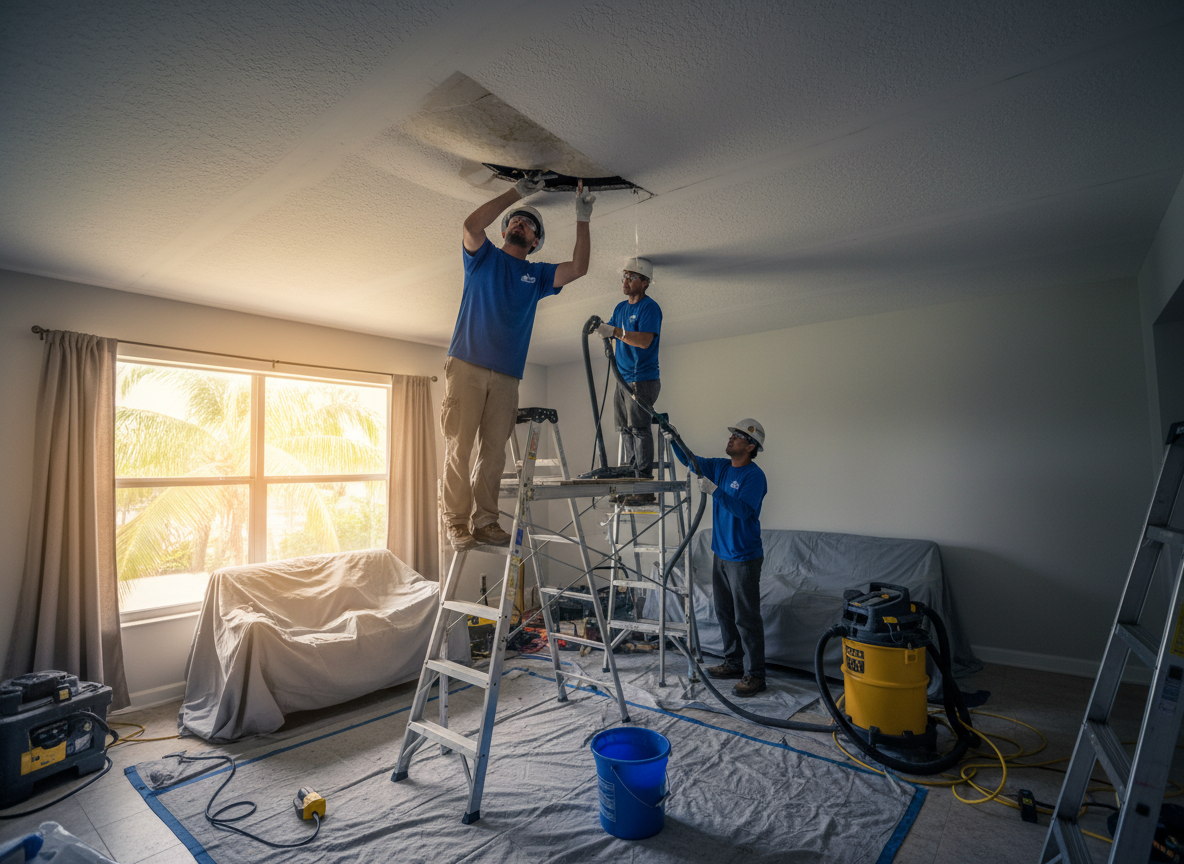
Ceiling water damage in Miami, FL, can range from minor discoloration to significant structural compromise, with repair costs typically falling between $400–$1,500 for localized issues like a small leak and stain, up to $3,000–$7,000+ for more extensive damage requiring drywall replacement, structural drying, and potential mold remediation. The exact cost and timeline depend heavily on the source of the water, the duration it has been present, and the materials affected. For instance, a small, recent leak in a stucco home in Coral Gables might be a quicker fix than a long-standing issue in an older Little Havana property with plaster ceilings and potential mold growth. Addressing the problem promptly is essential to prevent secondary damage, especially in Miami-Dade County's tropical monsoon climate with its hot, wet summers, which accelerates mold development.
Common Causes of Ceiling Water Damage in Miami
Understanding the source of ceiling water damage is the first and most critical step in addressing the problem. In Miami's unique climate and housing landscape, certain issues are particularly prevalent. Leaky roofs are a primary culprit, especially after the heavy rains characteristic of our wet summers. Older homes in areas like Coconut Grove or Wynwood, with aging roofing materials, are often susceptible. Plumbing leaks from upstairs bathrooms or kitchens are also common, whether it's a slow drip from a faulty pipe connection, a compromised drain line, or an overflowing toilet. Even HVAC condensation lines can cause significant damage if they become clogged, leading to water backing up and dripping through ceilings, a frequent issue in our humid environment where air conditioners run almost year-round. Recognizing these common sources helps pinpoint the problem quickly, which is vital for effective water damage repair.
Another often-overlooked cause is issues with exterior walls and windows, especially in multi-story buildings common in Downtown Miami or Brickell. Cracks in stucco, failing window seals, or deteriorated flashing can allow rainwater to penetrate walls and travel downwards, eventually manifesting as ceiling stains or drips on lower floors. The high humidity and frequent downpours in Miami-Dade County mean that even small breaches can allow a surprising amount of water intrusion over time. Ignoring these exterior issues will only lead to recurring ceiling damage, making it crucial to inspect the entire building envelope.
Identifying and Assessing Ceiling Water Damage
Once you suspect ceiling water damage, a thorough assessment is crucial to determine the extent of the problem. Start by looking for obvious signs like water stains, which often appear as yellowish or brownish rings. These stains indicate past or ongoing water intrusion. Sagging or bulging drywall is a more severe sign, suggesting the ceiling material has absorbed a significant amount of water and is losing structural integrity. You might also notice peeling paint or cracked plaster, which are common as moisture compromises the adhesion of these finishes. In some cases, a musty odor, even without visible signs, can indicate hidden moisture and potential mold growth, especially in enclosed spaces like attics or between floors.
Beyond visual inspection, gently pressing on the affected area can reveal softness or sponginess, confirming moisture saturation. For active leaks, placing buckets to collect dripping water is a temporary measure, but the priority should always be to stop the source. If the leak is from an upstairs unit in a condo in Brickell or a multi-family home in Little Havana, communication with neighbors or property management is essential. For roof leaks, a professional assessment is often required to identify the exact point of entry. Documenting the damage with photos is also important for insurance claims. For more on addressing these issues, consider reading our article on Wet Drywall Repair in Miami, Florida – Prevent Costly Water Damage.
Steps for Effective Ceiling Water Damage Repair
Effective ceiling water damage repair involves several key steps, starting with stopping the water source. This might mean turning off the main water supply, repairing a leaky pipe, or patching a roof. Until the source is contained, any repair efforts will be futile. Next, water extraction and drying are critical. For saturated areas, this involves removing standing water and using specialized equipment like industrial dehumidifiers and air movers to dry out the affected materials thoroughly. In Miami's humid climate, proper drying is paramount to prevent mold. Simply letting it air dry is often insufficient and can lead to significant secondary issues.
Once dry, damage assessment and material removal begins. Heavily damaged drywall, insulation, or plaster that cannot be salvaged must be carefully removed. This often involves cutting out sections of the ceiling. For areas where mold has started to grow, especially common in our tropical environment, professional mold remediation is necessary to ensure all spores are eradicated and future growth is prevented. After removal, the structural integrity of the remaining framing should be inspected. Finally, repair and restoration involves installing new drywall or plaster, taping, mudding, sanding, priming, and painting to match the existing ceiling. This process can be complex, especially in older homes with unique finishes or architectural details found in areas like the Design District or near Vizcaya Museum.
Preventing Future Ceiling Water Damage in Miami Homes
Proactive measures are key to preventing future ceiling water damage, especially given Miami's climate. Regular roof inspections are paramount; a professional should check for damaged shingles, cracked flashing, and clogged gutters at least once a year, or after any significant storm. This is particularly important for homes near the coast or in areas prone to high winds. Inspecting plumbing fixtures and pipes, especially in older homes in Overtown or near Freedom Tower, can identify small leaks before they escalate. Pay attention to any changes in water pressure or unexplained increases in your water bill, as these can be indicators of hidden leaks.