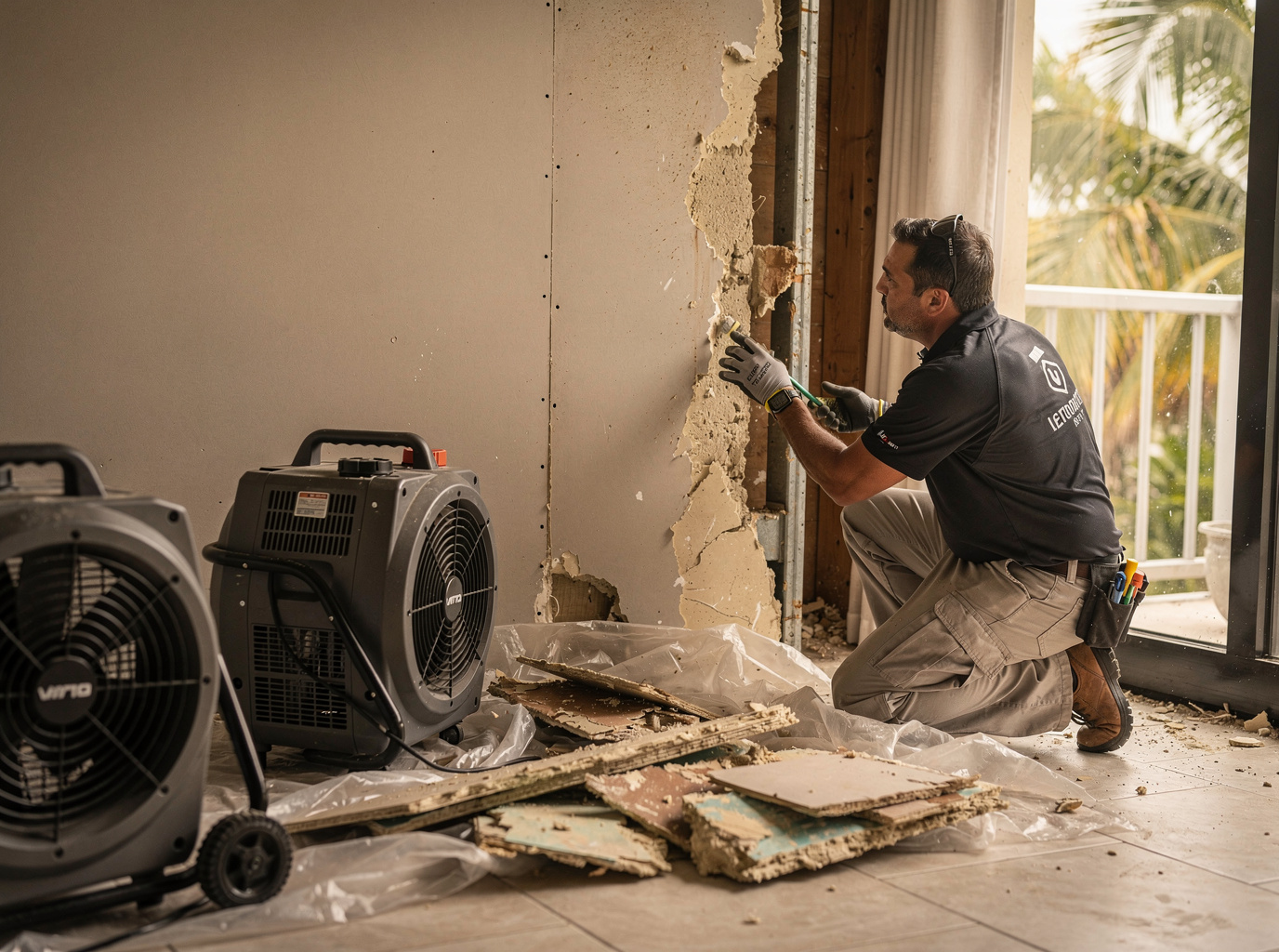
Water damage restoration in Miami requires practical experience with tropical monsoon patterns and the city’s mix of building types. Many properties in Coconut Grove and Coral Gables have older plaster and hardwood that absorb floodwater differently than newer concrete construction in Brickell or Downtown Miami. Salt air near Biscayne Bay accelerates metal corrosion after a leak; that means we prioritize drying metal fast and inspecting structural connectors. When water comes from storms that stall over Miami-Dade County or stormwater backups near Vizcaya Museum Drive and older sewer mains, contaminants are often present — so containment and removal of contaminated materials is a first step, not an afterthought.
Effective restorations combine aggressive moisture extraction with care for local finishing materials. For tile and limestone common around Miami Beach and parts of the Design District, grout and setting mortars can retain moisture long after surface tiles feel dry; we use moisture mapping and in-place drying to prevent hidden rot. In Little Havana and Overtown, many houses have plaster walls and original baseboards — cut-and-replace is sometimes necessary to stop mold, but we first try controlled drying and hygroscopic drying tents to salvage original materials where feasible. We coordinate with homeowners who need permits or inspections in Coral Gables or Hialeah, and we always advise on next steps for plumbing repairs and local code considerations when municipal inspectors are involved.
Preventive Tips for Miami Homeowners
- Watch roof flashings and window seals before the summer rainy season; burst tropical downpours are the most common cause of interior water entry in Brickell high-rises and older single-family homes alike.
- Keep gutters clear of leaves and debris from banyan and mango trees, especially around Coconut Grove and Coral Gables, to avoid overflow into soffits and attics.
- After any flood event, open cabinets and remove baseboards where water rose above the flooring to allow air movement; in Miami’s humidity, trapped moisture breeds mold fast.
- If you smell mustiness after a storm or notice dark spots behind baseboards, call for moisture mapping — visual dryness is not proof that assemblies are dry.
What To Expect When We Arrive
We start with a rapid assessment and moisture mapping using meters tuned for wood, concrete and drywall assemblies common in Miami homes. We explain containment, whether demolition will be needed, and how we’ll handle mold-suspect areas near kitchen backsplashes or laundry rooms. If mitigation involves drying in place, we set targets for structural moisture content and a timeline; if demolition is needed, we perform selective tear-outs to expose wet framing while protecting personal property and minimizing disruption. Final steps include a walk-through and documentation you can share with insurers or municipal inspectors.
Technician insight
In Miami, the thing that catches most people out is assuming things are dry once surface areas look dry. Between the high humidity of our wet season and older homes in Little Havana and Coconut Grove with plaster or hardwood, moisture hides in walls and under flooring. If you don’t pull baseboards or use moisture mapping, mold and rot return after a few weeks.
Laundry Room Overflow in Little Havana
Problem → A second-floor laundry overflow soaked the ceiling of a first-floor living room near Calle Ocho. What we found → Standing water had wicked into the plaster ceiling and into a double-floor joist bay; moisture meters showed high readings in adjacent floorboards. What we did → We performed targeted ceiling tear-out, set up an array of dehumidifiers and drying panels to pull moisture from the joist bay, and contained the space for mold prevention. Outcome → Structural moisture returned to acceptable levels, the home was cleared for repairs, and homeowner avoided replacement of the entire living-room finish.
Water Damage Repair Services We Offer
✓Emergency Water Extraction
Immediate pump-out and truck-mounted extraction for standing water from storms, sewer backups, or burst pipes in homes across Downtown Miami, Wynwood, and surrounding neighborhoods.
✓Structural Drying and Moisture Mapping
Targeted drying using axial fans, dehumidification and thermal mapping to reduce moisture in hardwood, concrete slabs, and plaster assemblies typical of Coral Gables and Coconut Grove properties.
✓Mold Remediation
Containment, HEPA air scrubbing, and careful removal of mold-affected materials in humid spots like Miami Beach condos, Little Havana row homes, and laundry rooms prone to hidden growth.
✓Ceiling and Wall Tear-Outs
Selective demolition of non-salvageable drywall, plaster or ceiling tiles to remove contaminated materials while preserving as much original finish as possible.
✓Odor Control and Sanitization
EPA‑safe sanitizing fogs and source-targeted odor removal after sewage, flood, or long-term moisture incidents near marinas and bayfront areas.
✓Contents Drying and Pack-Out Services
On-site and off-site drying for furniture, documents and textiles salvaged from water events in Brickell high-rises and single-family homes throughout Miami-Dade County.
✓Sub-Floor and Slab Moisture Treatment
Diagnostic testing and drying strategies for moisture trapped under tile, vinyl or hardwood over concrete slabs—common in homes converted from former commercial structures in Wynwood and the Design District.
How it works
- 1
Initial Call & Triage
We gather symptoms (source, visible damage, standing water), advise emergency shutoffs, and schedule an on-site assessment—typically same-day when possible for severe leaks in Brickell, Downtown Miami, or near Marlins Park.
- 2
Assessment & Plan
On arrival we perform moisture mapping, classify the water source (clean, gray, black) and outline containment, demolition needs, and drying targets. We document conditions so you can share findings with insurance or building inspectors.
- 3
Mitigation & Drying
We remove contaminated materials as needed, set up extraction equipment, fans and dehumidifiers sized to the space and Miami’s humid climate, and monitor moisture daily until targets are met. Mold-suspect areas get HEPA containment and air scrubbing.
- 4
Restoration Scope & Handover
After structural drying, we coordinate with homeowners or contractors for repair of finishes, replacement of baseboards or drywall, and provide a final walkthrough with documented moisture readings.
Pricing
Pricing varies with source and extent of damage—emergency extraction has a different scope than structural tear-out plus mold remediation. We provide upfront quotes after assessment; factors that raise cost include contaminated (sewage) water, inaccessible crawlspaces, and salvage vs. replace decisions for historic finishes.