
2026-10-21 ·
Water-Damaged Hardwood Floor Repair in Miami, FL – Prevent Further Damage
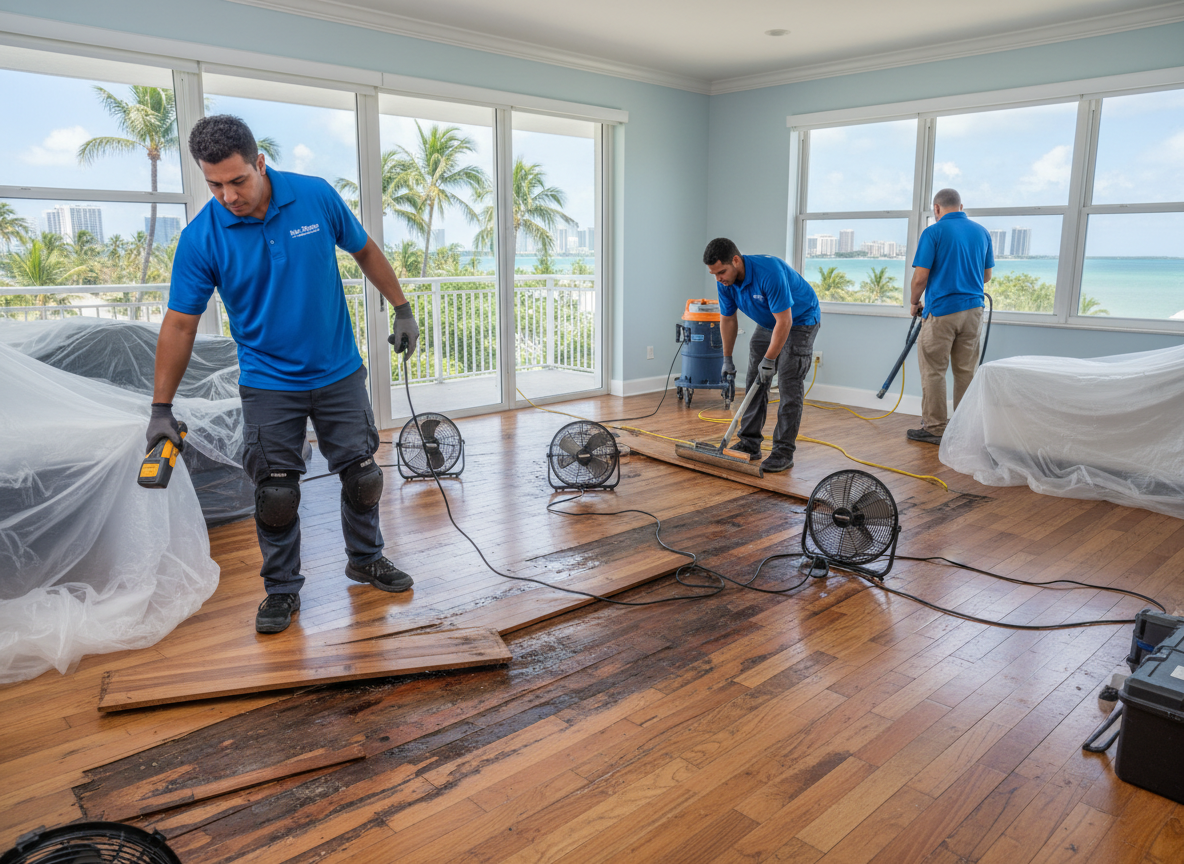
Repairing water-damaged hardwood floors in Miami, FL, can range from a few hundred dollars for minor surface issues to several thousand for extensive damage requiring replacement. The cost depends heavily on the extent of the water exposure, the type of wood, and how quickly professional intervention occurs. For instance, a small area of cupping or crowning from a localized spill might be dried and refinished for $400–$1,500, while widespread buckling or warping across an entire room due to a burst pipe or significant tropical storm flooding could easily reach $3,000–$8,000 or more, especially if subfloor replacement and extensive drying are needed. Preventing further damage hinges on swift action: immediately removing standing water, initiating professional drying, and addressing the source of the moisture. In Miami-Dade County's tropical monsoon climate, with its hot, wet summers, humidity is a constant factor, making rapid response even more critical to mitigate issues like mold growth and irreversible wood deterioration.
Understanding Water Damage to Hardwood Floors in Miami
Hardwood floors, while beautiful, are highly susceptible to water damage, a common issue in Miami's humid environment and during its frequent heavy rainfalls. When wood absorbs moisture, it swells, leading to several distinct problems. Cupping occurs when the edges of the planks rise higher than the center, often due to moisture from below. Conversely, crowning is when the center of the plank rises, usually from moisture exposure on the surface. More severe damage includes buckling, where planks lift significantly from the subfloor, and warping, a twisting or bending of the wood. The age of homes in areas like Little Havana or Overtown, often featuring older plumbing systems, can contribute to hidden leaks that slowly damage floors over time. Furthermore, the high water table in much of Miami, coupled with heavy rains during our tropical monsoon climate, means that even minor foundation cracks can allow moisture to seep in, affecting subfloors and subsequently, the hardwood above. Prompt and thorough drying, often requiring specialized equipment, is essential to prevent these issues from worsening and to avoid secondary damage like mold.
Immediate Steps to Prevent Further Damage
Once you discover water damage to your hardwood floors in Miami, immediate action is paramount to minimize the impact and reduce repair costs. First, stop the water source if possible—whether it's a leaky appliance, a burst pipe, or a roof leak. Next, remove all standing water using wet/dry vacuums, mops, and towels. The faster you get the bulk of the water off the floor, the less it will penetrate the wood and subfloor. After visible water is gone, increase air circulation by opening windows and doors if the outdoor humidity is lower than inside, and use fans to direct air across the affected areas. Dehumidifiers are crucial in Miami's climate to pull moisture from the air and, consequently, from the wood itself. For significant water intrusion, especially in older homes in areas like Coconut Grove or Coral Gables, where subfloors might be older and more porous, professional intervention for structural drying is almost always necessary to prevent long-term issues. You can learn more about comprehensive water damage services, including emergency water extraction, at our dedicated page for [/services/emergency-water-damage-restoration].
Professional Assessment and Drying Techniques
For any substantial water damage, a professional assessment is vital. Our team, familiar with the unique challenges of Miami-Dade County, uses specialized moisture meters to accurately determine the extent of water saturation in your hardwood floors and the subfloor beneath. This step is critical because surface drying alone is often insufficient, leaving hidden moisture that can lead to mold growth and continued wood deterioration. We deploy industrial-grade dehumidifiers and air movers to create a controlled drying environment, carefully monitoring humidity levels and wood moisture content. This process, known as in-place drying, aims to restore the wood to its pre-damage moisture levels slowly and evenly, which helps to minimize further warping or cracking. In some cases, especially in dense, older hardwood found in historic properties near Vizcaya Museum or Freedom Tower, it may be necessary to remove a few planks to facilitate drying underneath, ensuring that the entire structure is thoroughly dry. This meticulous approach is key to effective water damage restoration.
Repairing and Restoring Damaged Hardwood Floors
Once the floors are thoroughly dried and stabilized, the repair and restoration phase begins. Minor damage, such as slight cupping or crowning, can often be resolved through sanding and refinishing. This involves sanding down the uneven surfaces and applying new stain and protective coats, effectively erasing the signs of water exposure. For more severe issues like buckling or extensive warping, individual planks or sections of flooring may need to be carefully removed and replaced. Matching existing hardwood can be a challenge, especially in older homes in the Design District or Wynwood with unique wood types or finishes, but skilled technicians can often source compatible materials. In cases where the subfloor has also been compromised, such as rot or mold, it must be addressed before new hardwood is installed. This might involve replacing sections of the subfloor to ensure a stable and structurally sound base for your restored flooring. Our expertise in miami fl water damage restoration ensures that every step, from drying to refinishing, is handled with precision.
Preventing Future Water Damage in Miami Homes
Given Miami's tropical monsoon climate and the prevalence of hot, wet summers, proactive prevention is essential to protect your hardwood floors. Regularly inspect plumbing fixtures, appliances, and roofs for leaks, especially before and after the rainy season. Consider installing smart water sensors in areas prone to leaks, such as under sinks, near water heaters, or in laundry rooms, which can alert you to moisture issues early. Ensuring proper drainage around your home's foundation is also crucial; clear gutters and downspouts direct rainwater away from the house, preventing it from saturating the ground near the foundation and potentially seeping into your home. For homes in low-lying areas or those susceptible to storm surge, such as properties in Downtown Miami or Brickell, exploring options for preventive waterproofing can offer an added layer of protection. Addressing these potential vulnerabilities can save you significant repair costs and stress down the line. For more insights on protecting your home, consider reading our article on Wet Drywall Repair in Miami, Florida – Prevent Costly Water Damage.