2026-10-04 ·
structural drying for coastal miami properties
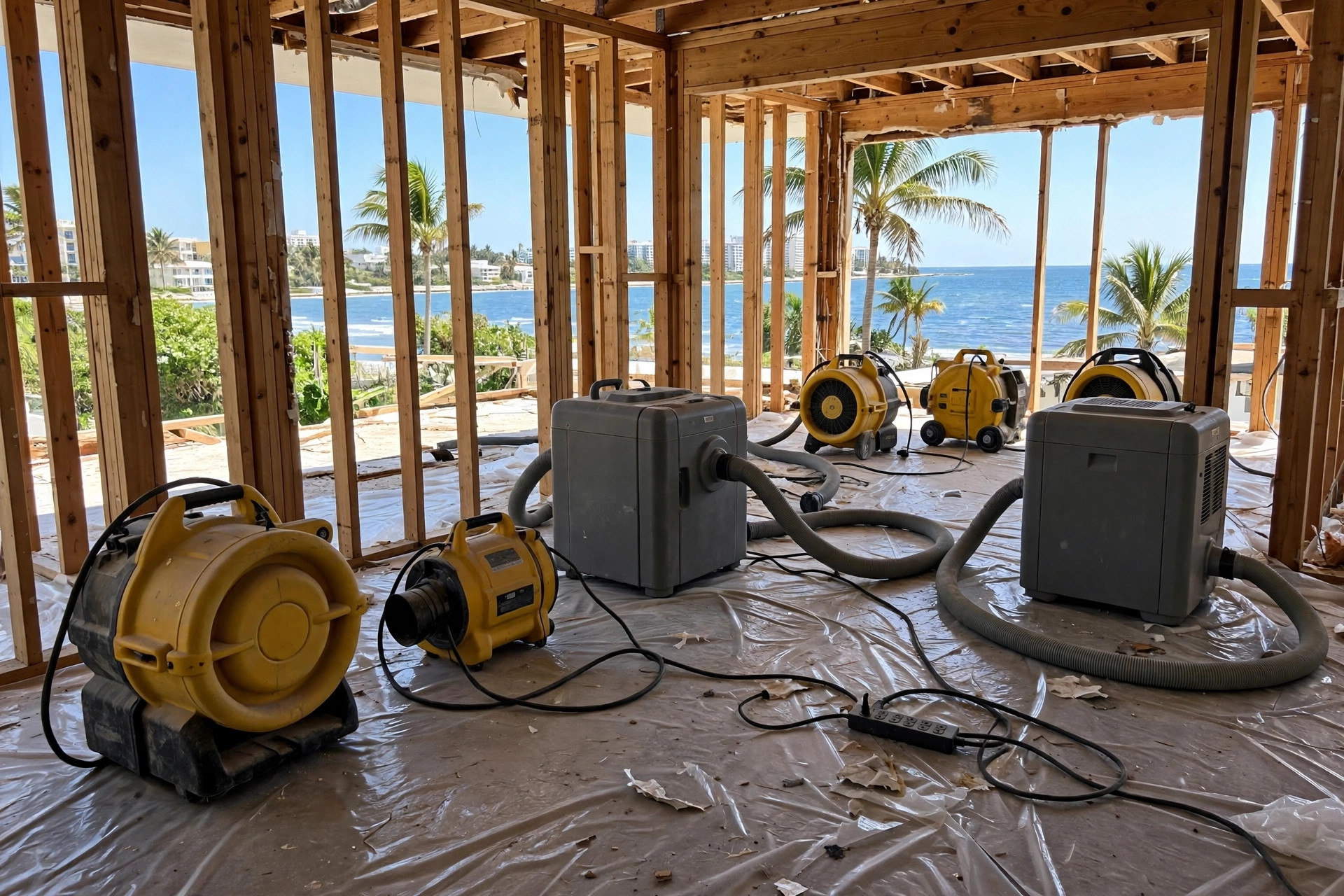
Structural drying for coastal Miami properties typically brings visible drying and moisture reduction in 3–7 days with commercial air movers and dehumidifiers running, though full repairs and reconstruction often take several weeks depending on damage and permitting. In Miami-Dade County's hot, humid climate the combination of elevated humidity and salt-laden air slows evaporation compared with inland jobs; that influences equipment selection, containment, and when demolition is necessary. Expect porous materials soaked for more than 24–48 hours—like carpet padding, baseboards, and some drywall—to need removal to prevent ongoing moisture traps and microbial growth. Costs for a focused structural drying mobilization in a condo or home often start around $800–$3,500 for equipment and labor-only drying runs, with larger, hurricane-related events rising from there. Our business hours are Mon–Fri 8am–6pm and Sat 9am–2pm for scheduling assessments and follow-ups.
Why coastal Miami is different for structural drying
Miami's tropical monsoon climate brings hot, wet summers and fast-moving storms that deliver both standing water and sustained humidity. That matters because drying is not only about removing liquid water but lowering the indoor relative humidity (RH) so building materials release trapped moisture. Buildings around Downtown Miami, Brickell and the Design District are often high-rise concrete and steel, where moisture migrates into finishes and HVAC systems; Coconut Grove and Coral Gables feature older masonry and wood-framed houses with plaster and laminated floors that absorb salt and moisture differently. In neighborhoods like Little Havana and Overtown, older masonry and original millwork can hide moisture behind layers of plaster. Salt from bay breezes near Bayside Marketplace and Vizcaya Museum speeds corrosion of metal fasteners and can require additional cleaning before reinstalling finishes. For structural drying this means we typically set up a mix of low-grain refrigerant dehumidifiers and air movers, monitor with multiple moisture meters and data loggers, and plan containment to prevent cross-contamination into HVAC systems or adjacent units—especially in condos near Miami Beach or Brickell where shared systems complicate drying logistics.
Equipment, monitoring, and typical steps we take
A coastal structural drying plan emphasizes continuous dehumidification and monitored airflow. Standard steps we implement: - Perform an immediate assessment and map moisture with pin and non‑penetrating meters plus thermal imaging where needed. - Remove wet porous materials that will hold moisture beyond 48 hours: carpet padding, wet insulation, and compromised drywall sections. - Install air movers to promote evaporation and position industrial dehumidifiers to capture that moisture; units are sized for the room volume and the exterior humidity load. - Use negative-air setups and containments to protect unaffected spaces and HVAC intakes. - Log readings twice daily to show falling moisture levels; we aim for consistent RH below 50% in living spaces before repairs begin. In Miami-Dade County, the outdoor humidity can be 70–90% in summer, so dehumidifiers get worked harder than in drier regions. When saltwater intrusion occurs after storm surge near Marlins Park or Freedom Tower, we also rinse and neutralize metal fixtures and fasteners to limit corrosion before reinstalling cabinetry or trim.
Mold risk and remediation considerations for coastal properties
Because Miami's hot, wet summers accelerate microbial growth, mold becomes a top concern whenever materials remain wet beyond 24–48 hours. In multifamily buildings like those in Brickell and Edgewater, spores can spread through shafts and HVAC, necessitating containment and HEPA filtration even during drying. Signs we look for on arrival include damp odors, visible staining on baseboards, and soft or crumbling drywall. Our approach pairs drying with targeted mold control: isolate affected areas, remove materials that cannot be dried in place, and use HEPA air scrubbers during demolition and reconstruction. If you need dedicated mold containment or post-flood mold work, see our related service page for emergency mold remediation after floods in miami homes. For condo owners in Coral Gables or Miami Beach, also consider our structural drying services for coastal properties which explain condo-specific access and insurance coordination challenges.
Practical timeline, costs, and what homeowners should prepare for
A realistic timeline for a single-family home in Coconut Grove or Coral Gables: - Day 1: assessment, water extraction, and containment. - Days 1–7: continuous drying and monitoring; equipment may run 24/7. - After RH and material moisture levels stabilize: targeted repairs and reconstruction, which can add 2–6 weeks depending on scope and permitting. For high-rise units in Downtown Miami or Brickell, access, elevator scheduling, and condo association rules can extend mobilization time. Cost drivers include the size of the affected area, whether saltwater was involved, and how much demolition is required. Small drying jobs may be in the $800–$3,500 range; larger flood events or hurricane-related operations typically cost more and may require multiple crews. Before we begin, we provide an upfront scope with monitoring goals so you can see the data that defines when drying is complete. For homeowners wanting next-step guides, our article on post hurricane flood repair tips for miami homes walks through insurance inventories, content moves, and temporary housing considerations.
What to watch for after structural drying and final advice
Even after meters show acceptable numbers, keep an eye on a few practical signs over the following months: - Musty or sour odors that persist after drying, which can indicate hidden moisture pockets. - Paint bubbling or blistering, especially on exterior-facing walls near Miami Beach or Biscayne Bay where salt intrusion is likely. - Corrosion on nails, metal door hardware, and HVAC coils. If any of these appear, schedule a follow-up moisture scan. For condo owners in Brickell and Downtown Miami, coordinate any reconstruction with building management and check HVAC return vents for recontamination. If you experienced significant flooding or sewage contamination, consider integrated services like content handling and pack-out to protect belongings. When you need immediate extraction before the drying phase, we list our rapid-response options on the 24 7 emergency water extraction and hurricane-specific extraction page 24 7 water extraction from hurricane flooding. Quick action in Miami's climate, correct containment, and ongoing monitoring are the three things that most improve outcomes for structural drying in coastal properties.