2026-10-04 ·
sewage backup cleanup safe steps for miami
# sewage backup cleanup safe steps for miami
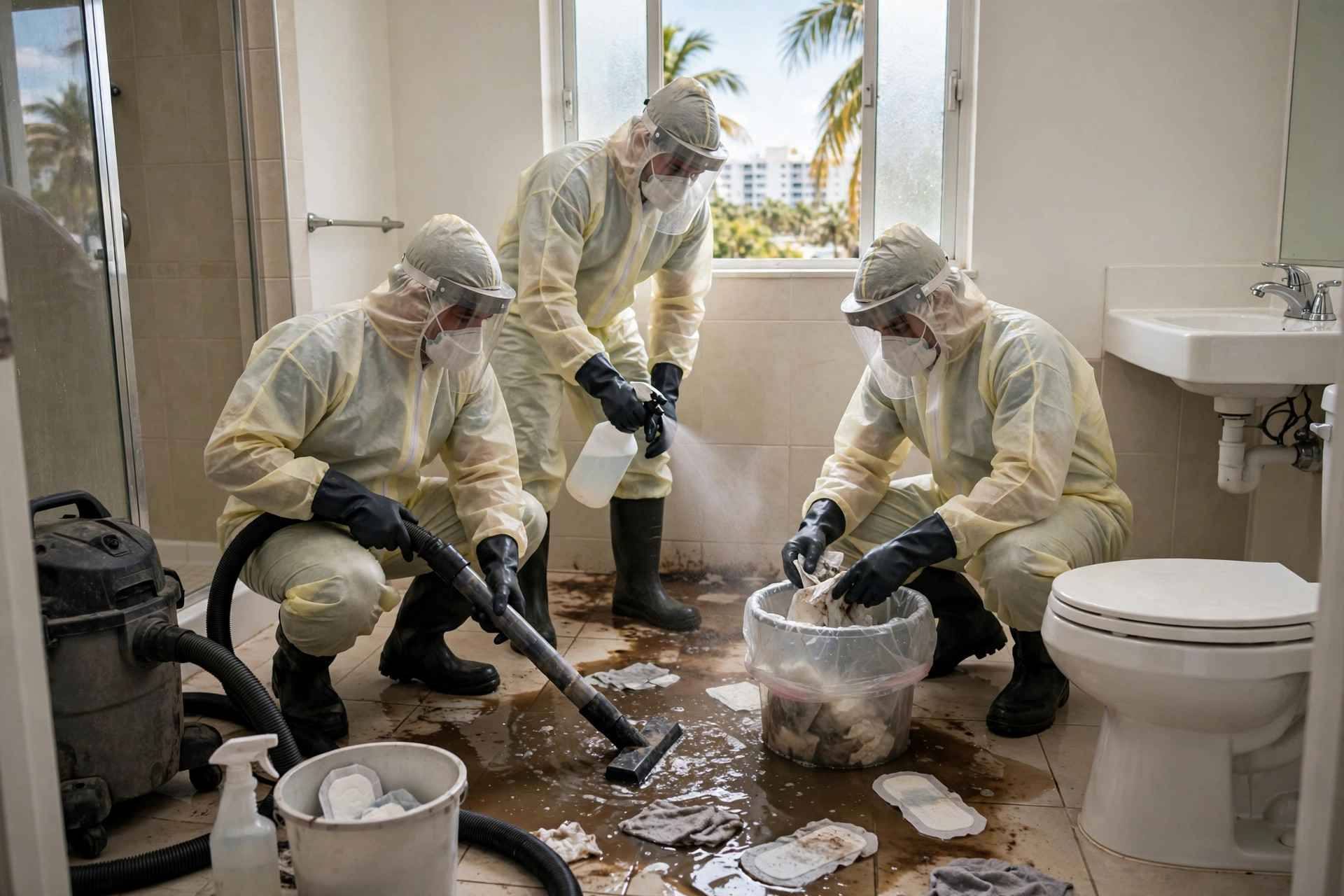
If sewage has backed up into your home or condo, the immediate, practical steps are: evacuate anyone vulnerable, cut power to affected rooms if safe, limit movement to contain contamination, and arrange professional cleanup within 24–48 hours for complete disinfection — especially in Miami’s hot, humid conditions where bacteria multiply fast. These actions reduce exposure to pathogens and lower the chance of lasting structural damage or mold growth that takes hold in 48–72 hours in a tropical monsoon climate like Miami-Dade County’s.
This post walks through safe on-the-ground steps you can take in Downtown Miami, Brickell, Wynwood, Little Havana, Coconut Grove, Coral Gables, the Design District and Overtown, explains why local climate and building types matter, and points to follow-up services for mold and structural drying. We note our business hours (Mon–Fri 8am–6pm, Sat 9am–2pm) so you know when to reach out for non-emergency questions or to schedule an assessment.
First actions at the scene: safety, containment, and documentation
When sewage enters living spaces the priority is health and limiting spread. First, evacuate children, seniors, pregnant people and anyone with lung issues. If standing water is present, avoid barefoot contact; wear rubber boots and gloves if you must enter. If water reaches electrical outlets or appliances, shut off power to the room at the breaker only if you can do so safely from dry ground. Next, close doors to contaminated rooms and place towels or rolled fabric at thresholds to slow soil transfer through hallways — in older Coral Gables and Coconut Grove houses with hardwood floors, this helps protect finish surfaces; in Brickell high-rise condos, stop foot traffic to avoid transferring contaminated water to elevators and common corridors.
Document the damage with photos and a quick inventory of wet items for insurance and contractors, focusing on porous materials like area rugs, upholstered furniture and ceiling tiles which commonly require removal. If the backup is coming from a known plumbing line (toilet, cleanout), shut off the water main to the unit to prevent further inflow until a plumber or restoration team can access it. These steps preserve evidence, control contamination paths, and set up a cleaner restoration phase in an environment where humidity and heat accelerate bacterial growth.
What homeowners should and should not try themselves
Sewage is Category 3 contamination: do not attempt full cleanup with household cleaners alone. Small, recent toilet overflows contained to non-porous flooring can sometimes be addressed by a homeowner with heavy-duty gloves, an N95 mask at minimum, and commercial disinfectant, but anything involving carpet padding, drywall, or HVAC requires professional removal. In Miami Beach and low-lying neighborhoods near Bayside Marketplace or the Design District where saltwater intrusion can complicate drying, structural drying and corrosion concerns make DIY risky. Avoid using regular vacuum cleaners on contaminated water; they can spread pathogens and ruin equipment. Also avoid bleach over large areas — it sanitizes surfaces but does not fully penetrate porous materials and can create toxic fumes when mixed with other cleaners.
If you do a limited, safe cleanup: ventilate from dry, secure windows, remove non-salvageable loose items to a clean area, and apply EPA-registered disinfectants to hard surfaces per label directions. For anything beyond surface cleaning — saturated carpets, ceiling failures, or signs of sewage in wall cavities — contact a trained restoration team and consider services like professional sewage backup cleanup and disinfection to ensure contamination is ful
How Miami’s climate, building stock, and neighborhoods influence cleanup priorities
Miami’s tropical monsoon climate means hot wet summers and high humidity that accelerate bacterial growth and mold colonization. In older neighborhoods like Little Havana and Overtown where many homes have stucco, block construction, and original plumbing, wall cavities and block pores can trap moisture and sewage residues requiring more aggressive demolition and drying. In Brickell and Downtown Miami high-rises, backups often originate from shared vertical stacks or roof drainage; contamination can quickly affect multiple units and common areas, so isolate HVAC and notify building management immediately. In Wynwood and the Design District, many commercial storefronts have concrete slab floors; non-porous surfaces simplify cleanup, but adjacent contents like canvas artwork or wooden displays need separate handling.
Soil and ground water conditions matter too: low-elevation parts of Miami-Dade County and areas near Vizcaya Museum or the Marlins Park can experience higher groundwater table effects after heavy rains, meaning sewage events may co-occur with infiltration or standing water. That increases the need for structural drying and potential waterproofing work afterward. Planning for follow-up includes checking subfloors, wall cavities and HVAC ducts for contamination, and scheduling mold
Follow-up steps: mold prevention, drying, and when to call pros
After visible sewage removal, the clock is on for mold prevention. If porous materials stayed wet for more than 48 hours, assume they will support mold. Arrange professional drying using industrial dehumidifiers and air movers; in condos in Brickell or Coral Gables, structural drying with controlled airflow prevents humidity migration into neighboring units. For homes where contents need pack-out or deep cleaning, consider a content restoration plan to isolate and treat personal items off-site. For suspected mold growth, follow up with targeted services such as emergency mold remediation after floods in miami homes and read our guide on prevent mold after water damage in miami to understand timelines and risks.
Final checks before re-occupying: HVAC filters replaced, visible odors removed with odor control technologies, and a written scope of what was removed and sanitized. If the sewage issue originated from building systems, coordinate with property management in Miami high-rises to inspect stacks and common drains. For questions outside emergency hours, note our availability Mon–Fri 8am–6pm and Sat 9am–2pm for assessments and scheduling — immediate hazards should be treated as urgent and han