2026-10-04 ·
mold remediation after water damage in miami
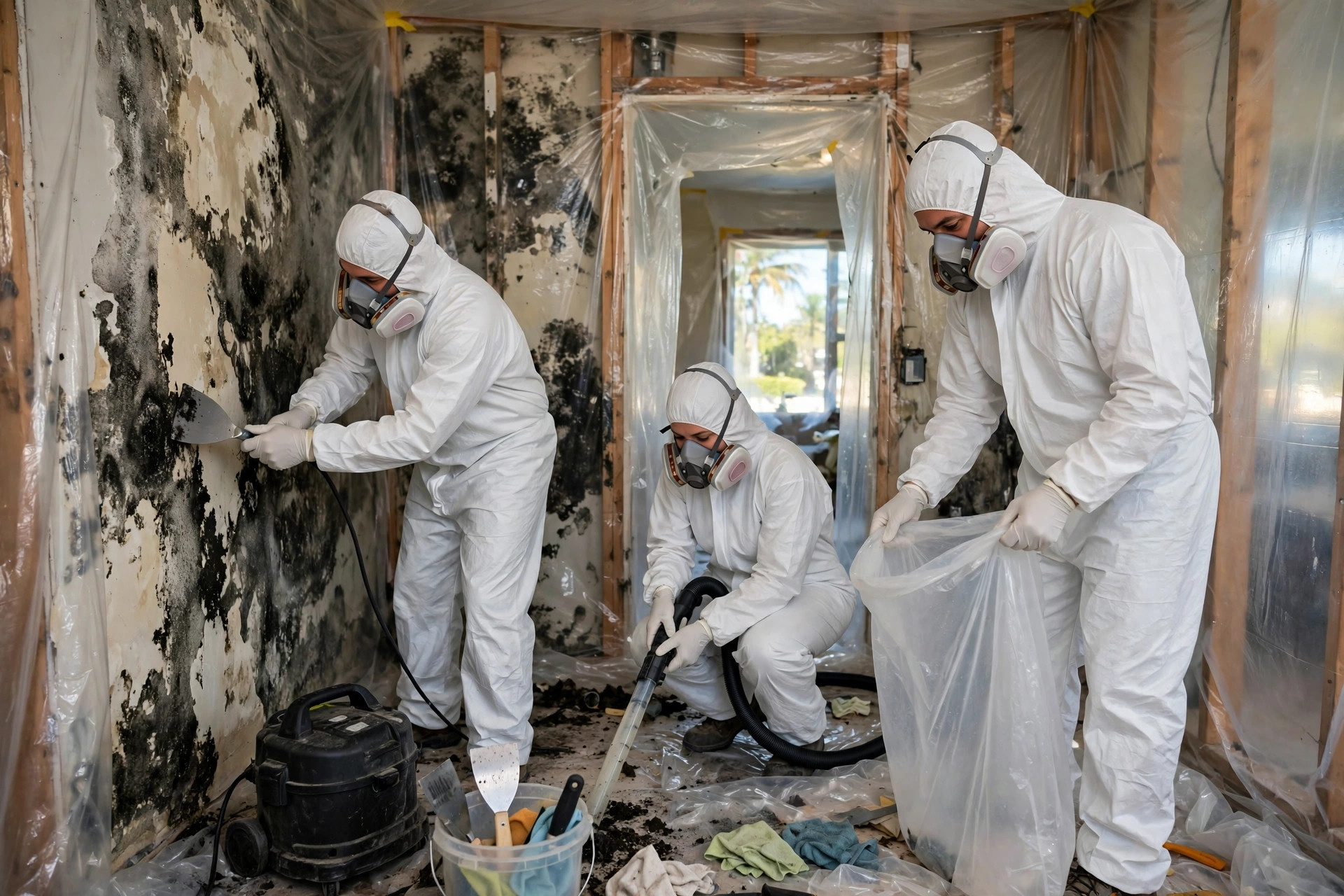
Mold remediation after water damage in Miami usually needs to begin within 24–72 hours of visible wetting to stop active growth; in Miami’s hot, wet summers that window closes faster, and many jobs take 3–10 days of active remediation work plus drying. If standing water or storm surge is involved you’ll add time for extraction and drying, and if floodwater was from a sewage source the process becomes more intensive. Below I explain why Miami-Dade County conditions accelerate mold, what we inspect in neighborhoods from Downtown Miami to Coconut Grove, the step-by-step remediation most properties need, realistic cost drivers and timelines, and how condo-specific issues change the approach.
Why mold grows fast in Miami after water damage
Miami’s tropical monsoon climate — hot, humid summers with frequent heavy rain — creates near-ideal conditions for mold spores once materials stay wet. After a pipe leak or roof leak in Brickell or a flood in Wynwood, indoor relative humidity often stays above 60% for days unless you aggressively dry with dehumidifiers and air movers. Many Miami homes and older Coral Gables bungalows have plaster, lath, or older plywood subfloors that soak and retain moisture longer than modern pressure-treated sheathing, increasing hidden mold risk. High-rise condos in Downtown Miami or Brickell and buildings near Bayside Marketplace or the Design District often have enclosed HVAC systems; if mold spreads into return ducts it can seed units vertically. Salt air near Miami Beach and Biscayne Bay means exterior stucco and soffits can mask water intrusion points. For these reasons remediation in Miami typically addresses both visible mold and hidden pockets in cavities, HVAC, and under floors — not just surface cleaning.
Assessing the damage: what we look for
A thorough assessment in Miami starts with a visual inspection and moisture mapping, and we always check areas that local weather and building types make vulnerable: roofs and parapets in Coconut Grove and Coral Gables, slab edges in Overtown where groundwater can be higher, and closets or interior walls in Little Havana where older plaster was used. We use moisture meters and thermal imaging to find cold, damp cavities where mold hides. Signs we track include: - musty odor persisting after surface drying - visible staining or fuzzy growth on drywall, wood, or carpets - bubbling paint or efflorescence on masonry near Vizcaya Museum–area foundations - HVAC supply/return discoloration and dusty deposits - elevated moisture readings (>16% in wood, >1.0 in drywall relative scale) Because Miami properties can have mixed water categories (clean water from a broken line vs. gray/black water from storms or sewage), we document water source and contamination level; this affects removal, antimicrobial application, and disposal.
Steps in practical mold remediation after water damage in Miami
Remediation here follows a clear sequence adapted to local conditions: 1. Contain the area: set up negative air and barriers to prevent spores moving between units in condos or into shared corridors. 2. Remove contaminated materials: saturated drywall, baseboards, insulation, and carpet pads often need removal — in high-rise Brickell condos we coordinate with building management for disposal. 3. Extract water and begin drying: use truck-mounted extractors or portable pumps, then run industrial air movers and dehumidifiers sized to the affected cubic footage; coastal properties need salt-control measures to protect equipment. 4. Clean and treat: HEPA vacuuming, controlled scrubbing, and localized antimicrobial application on non-porous surfaces. 5. Verify dryness and clearance: follow-up moisture readings and visual checks; in units with HVAC exposure we inspect ducts. 6. Repair and restore: replace removed materials and monitor for 48–72 hours. For flooded homes near Marlins Park or properties affected by hurricane surge, step 1 includes evaluating structural drying needs and possible content pack-out to a clean area — see our content pack out and restoration from floods page and the [emergency mold remediation after floods in miami homes](/services/e
Cost drivers and realistic timeline for Miami projects
Costs in Miami vary by scope; smaller, localized mold remediation jobs after a minor leak can run in the $400–$1,500 range, while larger flood-related or multi-room remediations escalate to $2,500–$15,000+ depending on contaminated material volumes, access, and whether HVAC or content pack-out is required. Key cost drivers: - Water category (clean vs. sewage or storm surge): sewage/floodwater raises disposal and treatment costs. - Square footage affected: more removal and rebuild work. - Hidden contamination: mold in wall cavities, under slabs, or inside ducts increases labor. - Access and building rules: condo buildings in Brickell or Downtown Miami often require elevator scheduling, insurance documentation, and vendor badges, which can add coordination time. Typical timelines: - Localized leak/mold: 3–7 days total. - Multiple rooms/partial structural removal: 7–14 days. - Major flood or sewage event with pack-out and rebuild: 2–6 weeks. These ranges assume drying equipment runs non-stop and materials are promptly sourced; during hurricane season lead times for rental dehumidifiers and rebuild crews often increase.
Preventing recurrence in Miami homes and condos
Prevention here must consider Miami-Dade realities: heavy summer storms, high groundwater in some pockets, and older housing stock in Little Havana or Overtown. Practical steps that reduce future mold risk: - Repair roof flashings, parapets, and balcony membranes in Coral Gables and Coconut Grove before the wet season. - Ensure proper drainage away from slab edges and grade around foundations to limit capillary moisture. - Run bathroom and kitchen exhaust fans during and after showers or cooking to lower indoor humidity; in high-rise units inspect and service shared ductwork annually. - Use HVAC systems with good filtration and schedule coil cleaning, since chilled coils condense moisture and can seed mold. - For condo owners: coordinate with building management on waterproofing balconies and garage drainage; for renters, report leaks immediately. For more detailed preventive steps see our article on prevent mold after water damage in miami and consider services like mold remediation after water damage in condos if you live in a multi-unit building.
Closing paragraph: In Miami, time matters. Start containment and drying within that 24–72 hour window to avoid heavier remediation and longer rebuilds. If your property is near landmarks like Pérez Art Museum or Freedom Tower, remember that high humidity and older building materials behave differently than newer construction near Brickell Key — plan for extra drying and targeted inspections of HVAC and cavities. Our posted hours are Mon–Fri 8am–6pm and Sat 9am–2pm for scheduling assessments; for immediate extraction needs check our emergency extraction and flood pages. Acting fast limits scope, cost, and the lingering health and odor issues that mold leaves behind.