
2026-10-21 ·
Flooded Garage Cleanup in Doral, FL – Remove Standing Water Fast
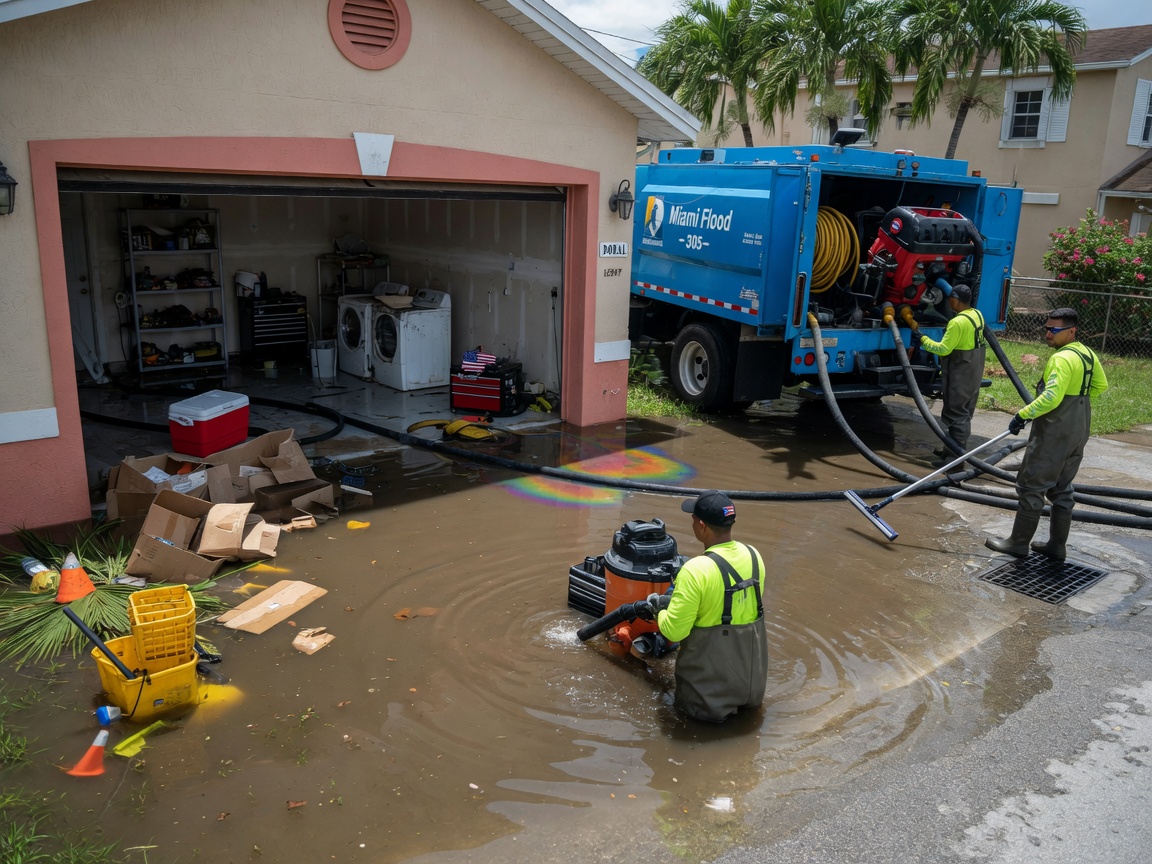
When your garage in Doral, FL, experiences flooding, the most important step is to remove standing water as quickly as possible, ideally within the first 24–48 hours to minimize structural damage and inhibit mold formation. Miami-Dade County's tropical monsoon climate, characterized by hot, wet summers, means that moisture intrusion can rapidly escalate into a serious issue, especially in enclosed spaces like garages. Homeowners in Doral, a city known for its newer developments and commercial hubs, often find their garages susceptible to water intrusion from heavy rains, overflowing irrigation, or even plumbing failures within the home itself. Addressing the water promptly can save you significant repair costs and prevent long-term problems such as compromised foundations or extensive mold remediation.
Immediate Steps for Water Removal
Once you discover standing water in your Doral garage, prioritize safety. Turn off electricity to the garage circuit at your main breaker panel to avoid electrocution hazards, especially if outlets or electrical appliances are submerged. Next, identify the source of the water if it's not immediately obvious. Is it a burst pipe, a leaking water heater, or rainwater seeping in? If it's an active leak, try to stop it. For rainwater, assess if any exterior drainage issues need addressing. After ensuring safety and stopping the source, begin removing the water. For shallow water, a wet/dry vacuum can be effective. For deeper water, a submersible pump will be necessary. Many Doral homes feature garages that are either attached or integral to the main structure, meaning water can quickly migrate into living areas if not contained. This initial phase is crucial, as every hour the water remains, the risk of damage to stored items, drywall, and concrete increases exponentially.
Assessing Damage and Salvaging Contents
With the bulk of the standing water removed, it's time to assess the damage and salvage what you can. Move any water-damaged items out of the garage to a dry, well-ventilated area. Items like tools, sports equipment, and boxes of personal belongings can often be cleaned and dried, but porous materials like cardboard boxes, upholstered furniture, or anything with significant water absorption might need to be discarded, especially if they've been submerged for more than 24 hours. Consider the value of the item versus the cost and effort of restoration. For electronics or items with sentimental value, consult with specialists. Remember, the goal is to prevent secondary damage from prolonged moisture exposure. This is particularly important in Miami's humid environment, where items can quickly develop mildew or rust if not properly addressed.
Drying and Dehumidification
After removing items and standing water, the garage needs thorough drying. Open garage doors and windows to facilitate airflow, weather permitting. Utilize fans, especially high-volume air movers, to circulate air and speed up evaporation. Dehumidifiers are essential in Miami-Dade County's climate to draw moisture out of the air and materials. Concrete floors and walls can hold significant moisture, and without proper drying, this can lead to persistent humidity and eventually mold growth. For severe flooding, or if water has wicked into drywall, professional-grade equipment for <a href="/services/structural-drying-for-flooded-basements">structural drying</a> might be necessary to ensure all hidden moisture is eliminated. Overlooking this step is a common mistake that leads to recurring problems, making it a critical phase in preventing long-term issues.
Preventing Mold Growth in a Humid Climate
Given Miami's tropical monsoon climate with its hot, wet summers, mold growth is a significant concern after any water intrusion. Mold can begin to grow within 24–48 hours of water exposure, making quick action paramount. After drying, clean all affected surfaces with a disinfectant solution to kill any lingering bacteria or mold spores. Pay close attention to corners, baseboards, and any areas where water might have pooled. If you notice a musty odor or visible mold growth, particularly on drywall or wooden studs, professional <a href="/services/miami-dade-county-mold-remediation">mold remediation</a> may be required. Attempting to clean extensive mold yourself without proper personal protective equipment can be hazardous. Preventing mold is not just about aesthetics; it's about maintaining healthy indoor air quality, which is especially important in tightly sealed Doral homes.
When to Call a Professional Water Damage Restoration Service
While some minor garage floods can be managed with DIY efforts, there are clear indicators when professional help is essential. If the water is more than a few inches deep, if it contains sewage, or if the flooding is widespread and affects structural components, it's time to call in experts. Our team specializes in <a href="/services/water-damage-restoration">water damage restoration</a> across Miami-Dade County, including Doral, and can handle everything from rapid water extraction to comprehensive drying and mold prevention. We operate Mon–Fri 8am–6pm, and Sat 9am–2pm, understanding that water emergencies don't always adhere to business hours. Professional services ensure that all moisture is detected and removed, and that your property is thoroughly sanitized and restored, preventing future complications that can arise from incomplete drying or overlooked contamination. For more insights on when to call the pros, consider reading our article on <a href="/blog/diy-vs-pro-flood-repair-miami-homeowner-advice">DIY vs Pro Flood Repair Miami Homeowner Advice</a>.