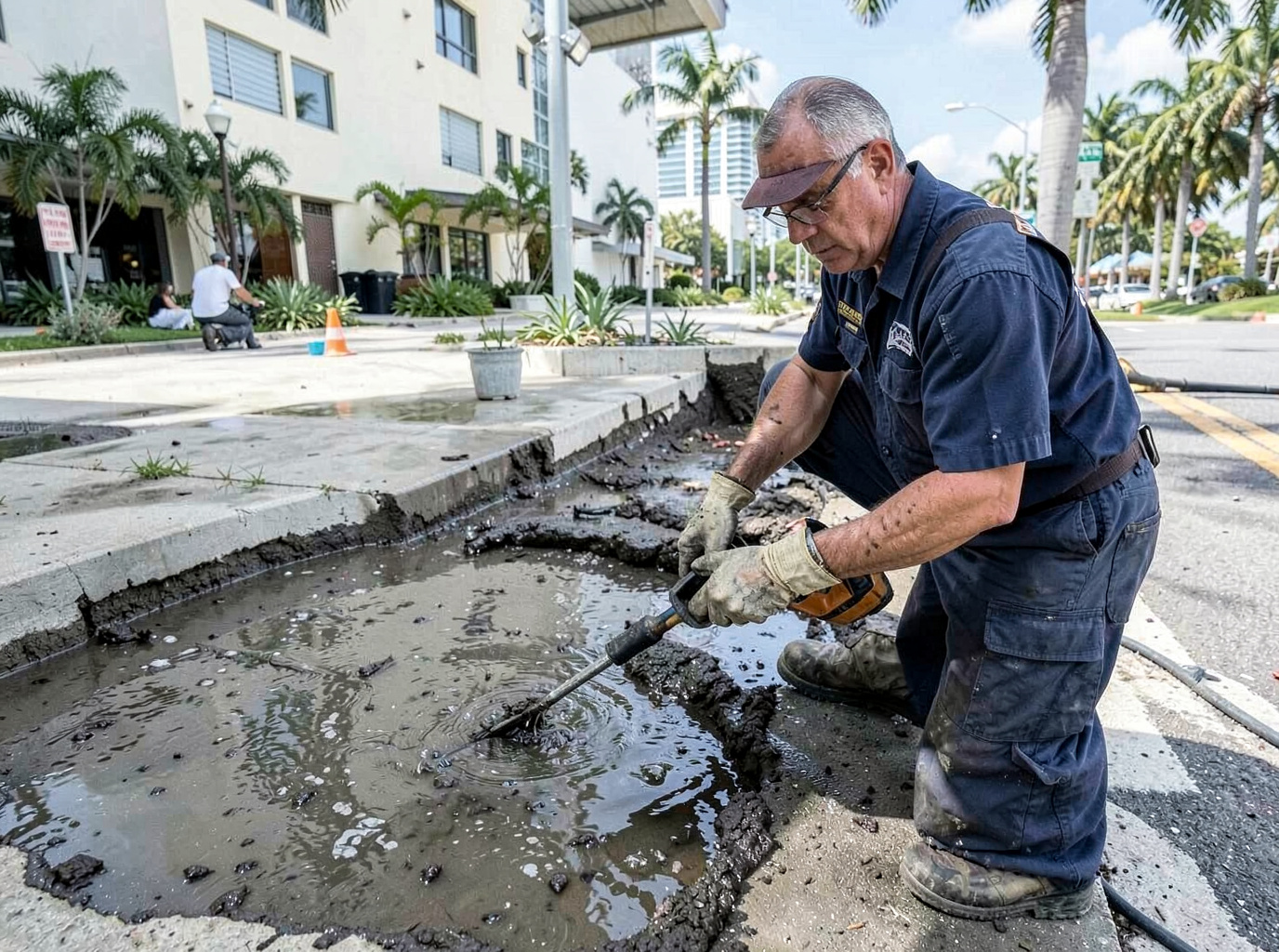
Living and working in Miami means dealing with a tropical monsoon climate: hot, humid summers with heavy downpours and occasional tidal surge that drive many of our water-damage calls. In Brickell and Downtown Miami high-rises, water intrusions often travel between condos through shared chases and veneer joints, while in Coral Gables and Coconut Grove the older plaster and lathe walls and mature-tree root systems change how water migrates. We focus on rapid extraction and moisture mapping to stop progressive damage — standing water, trapped moisture in wall cavities, and wicking under baseboards — because in Miami-Dade County heat plus humidity turns hidden wet materials into mold habitats within days.
Materials and construction in Miami create specific edge cases: many properties around Vizcaya Museum, Little Havana, and Overtown were built with masonry block or older wood framing, and that affects drying strategy and drying times. Coastal properties near Biscayne Bay and Bayside Marketplace sometimes have elevated salt content in floodwater, which accelerates metal corrosion and leaves crystalline deposits in gypsum and concrete pores. For these jobs we use targeted dehumidification, controlled heat, and corrosion-aware cleanup — and we document moisture readings for insurance purposes rather than guessing. Also note that homes in low-lying spots of Miami Beach, Hialeah, and parts of Wynwood may require different mitigation because of higher groundwater and backflow risks.
Code and safety notes that matter here: when water reached electrical outlets or breaker panels in Marlins Park–adjacent commercial units or older Little Havana homes, we isolate power and coordinate with electricians before proceeding — water plus live circuits is the single greatest on-site hazard. When mold remediation is needed, we follow containment and HEPA filtration practices to limit spore spread between connected units in multi-family buildings like those in the Design District and Coral Gables. We also advise property owners about immediate steps after a leak or storm: stop the source if safe to do so, move valuables off wet floors, and call a restoration crew that documents conditions with photos and moisture logs to help with claims in Miami-Dade County.
Technician insight
In Miami the thing that catches most people out with water damage is hidden moisture in block walls and slab edges—salt-laden coastal floodwater and the humid summer climate make porous masonry retain dampness far longer than drywall, so jobs often need longer dehumidification and repeated moisture checks before repair.
Condo ceiling leak in Downtown high-rise
Problem → A Downtown Miami condo reported a ceiling leak after heavy summer storms. What we found → water had tracked along an AC chase between units and saturated ceiling drywall and attic insulation. What we did → isolated the unit, extracted residual water, removed compromised drywall and insulation, set targeted drying equipment, and monitored moisture until readings were stable. Outcome → the unit dried to acceptable moisture levels and we prepared photo documentation and a repair plan for the owner and the building manager.
Water Damage Services We Offer
✓Emergency Water Extraction
Immediate on-site extraction of standing water from homes and businesses in Downtown Miami, Brickell and Wynwood using truck-mounted pumps and portable units to reduce secondary damage.
✓Structural Drying and Dehumidification
Targeted drying plans using industrial dehumidifiers and axial fans, with moisture mapping to confirm drying of wall cavities and concrete slabs common in Coral Gables and Coconut Grove.
✓Mold Remediation
Source identification, containment, HEPA air scrubbing, and surface cleaning for mold problems that follow water events — especially in humid months when spores take hold quickly.
✓Floodwater Cleanup and Sanitation
Removal of contaminated floodwater, sanitizing affected surfaces, and salt-residue mitigation for properties near Biscayne Bay, Bayside Marketplace, and coastal neighborhoods.
✓Ceiling and Drywall Tear-Out
Selective demolition and replacement of compromised gypsum and insulation in older Miami homes and multi-family units to prevent hidden mold and structural failure.
✓Moisture Testing and Documentation
Thermal imaging, hygrometer readings, and photo logs prepared for homeowners and insurance adjusters to show the scope and progression of water intrusion.
How it works
- 1
Emergency assessment and source control
We identify and, where possible, stop the water source, whether it's a burst pipe in a Brickell condo, a roof leak near Vizcaya Museum, or stormwater entering a Coral Gables crawlspace. We secure the scene and isolate electrical hazards before extraction.
- 2
Extraction and debris removal
Standing water is removed with pumps and wet vacs, followed by removal of unsalvageable materials like saturated carpet padding or heavily contaminated drywall, especially after floodwater that may contain salt or sewage.
- 3
Drying strategy and monitoring
We set up dehumidifiers and directional airflow with fans, monitor moisture with meters and thermal cameras, and adjust equipment until target moisture levels are reached for Miami's humid climate.
- 4
Cleaning, disinfection and repairs
Affected surfaces are cleaned and sanitized; corrosion-prone materials are treated; then we recommend or coordinate repairs such as drywall replacement or repainting to return the property to service.
Pricing
Typical jobs vary by size and contamination level; expect small interior leaks to start at modest mitigation costs and large flood events to scale by affected square footage and contamination (clean water vs. flood/sewage).