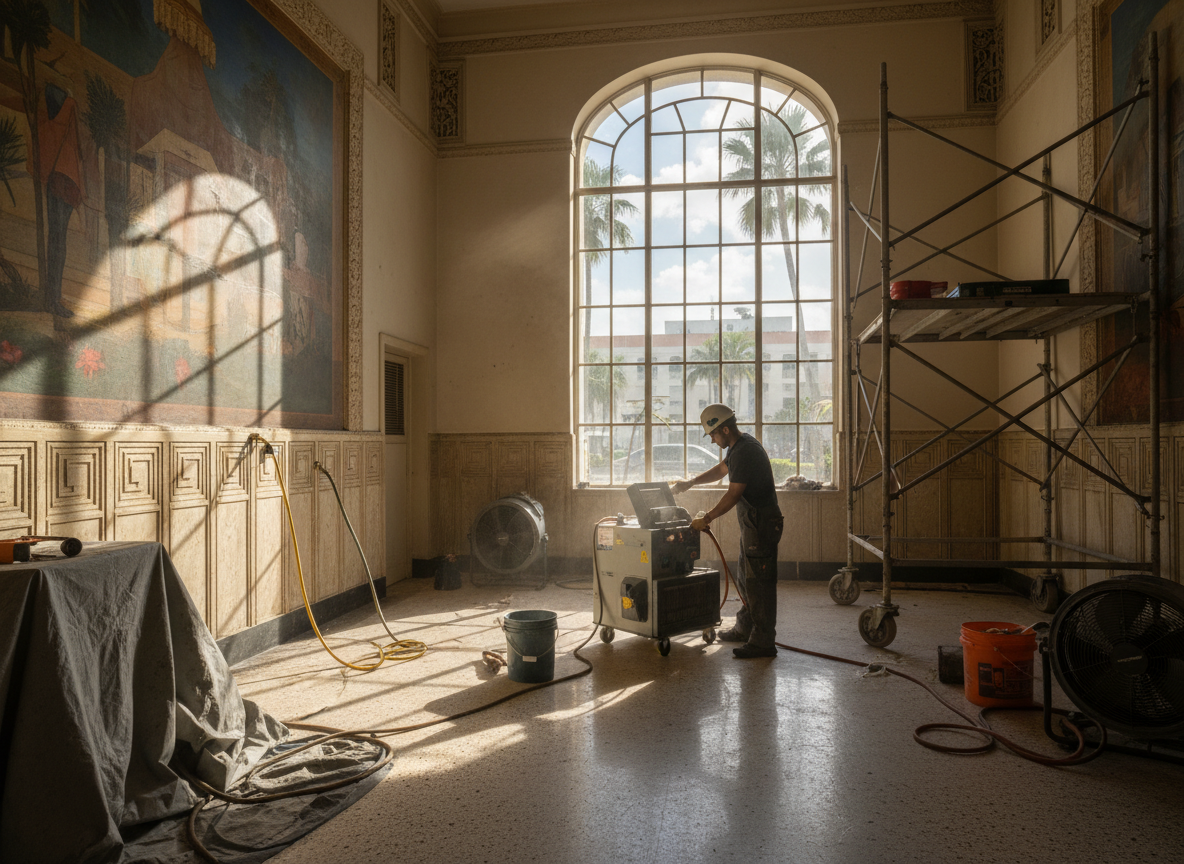
Miami’s building stock—from pre-war bungalow clusters in Little Havana to mid-century condos in Coconut Grove and high-rises in Brickell—changes how we approach water damage. Older plaster walls and tile-set floors react differently to prolonged moisture than modern drywall and vinyl plank; historic Coral Gables houses often hide rot behind baseboards, while Wynwood’s converted warehouse lofts expose timber or metal framing. In a tropical monsoon climate with hot, wet summers, delays of even 24–48 hours let humidity drive mold growth and structural staining. We prioritize drying strategy by material: controlled dehumidification and low-heat air movers for plaster, tented structural drying for exposed timbers, and targeted cavity drying where condos near Bayside Marketplace or Miami Beach show interstitial leaks.
Flooding from heavy summer storms or a failed fixture near Marlins Park requires different containment than slow leaks around a Vizcaya Museum gutter. On structural jobs we focus on three practical realities: water source control (shutting off valves, isolating HVAC condensation), moisture mapping (noninvasive infrared and moisture probe work through tile and stucco), and staged demolition where necessary to remove mold-nurturing materials but preserve historic trim. For commercial properties around Freedom Tower and the Design District, we coordinate with property managers to protect finishes and limit business interruption. We work Mon–Fri 8am–6pm and Sat 9am–2pm for inspections and mitigation scheduling, with clear scopes so Miami-Dade clients know what to expect.
Mold remediation in our climate is not a cosmetic job; it’s moisture management. In hot, humid months mold can colonize on organic materials and the glue lines of engineered wood in weeks. We emphasize removing the moisture source first—roof flashing failures near Coconut Grove, leaking balcony membranes in Brickell towers, or slab-sourced groundwater in low-lying Overtown—and then applying containment, negative pressure, and HEPA filtration when removing contaminated materials. Building codes and condo association rules in Coral Gables and nearby Hialeah often dictate permitted demo and disposal; we scope and explain what must be replaced versus what can be cleaned and monitored to keep projects efficient and code-conscious.
Prevention and homeowner guidance are part of every job. For Miami Beach and coastal properties we review patio and window flashing, recommend slope and storm-drain improvements for yards that back up during seasonal downpours, and advise on humidity control strategies for interiors—setpoints and dehumidifier sizing that actually work in a tropical monsoon climate rather than generic advice. We document moisture readings and photographic evidence so owners and adjusters can see what we found and why specific repairs were needed. Our approach is practical and upfront: owner-operated coordination with contractors, clear mitigation steps, and hands-on oversight through final clearance and moisture verification.
Technician insight
In Miami the thing that catches most people out with restoration is waiting through the rainy season—delays let humidity and invisible moisture migrate into wall cavities and under tile, creating hidden mold behind baseboards and in crawlspaces. Older homes in Little Havana and Coral Gables often have plaster and lath that needs different drying approaches than modern drywall, and failing balcony membranes in Brickell condos are a recurring moisture source we have to trace before remediation.
Condo Balcony Leak in Brickell
Problem → A third-floor Brickell condominium reported brown staining on the living room ceiling after a heavy tropical downpour. What we found → moisture mapping traced the source to a failed balcony membrane allowing water to run into the slab and through the balcony header into the unit below. What we did → we contained the unit, removed affected ceiling drywall and insulation, set cavity drying and a dehumidifier, and coordinated with the building’s maintenance for balcony repairs. Outcome → moisture readings returned to target levels and the ceiling was rebuilt with documented photos for the association and the owner.
Restoration Company Services We Offer
✓Emergency Water Extraction
Rapid removal of standing water from homes and businesses across Downtown Miami, Brickell and Wynwood using truck-mounted pumps and portable extractors, followed by immediate containment to prevent migration into adjacent suites or units.
✓Structural Drying and Dehumidification
Targeted drying plans using industrial air movers and low-grain refrigerant dehumidifiers tailored to materials like plaster, tile, concrete slab, and engineered wood common in Coconut Grove and Coral Gables properties.
✓Mold Remediation
Containment, HEPA air filtration, selective removal of mold-affected materials and clearance testing, with emphasis on moisture source elimination for Miami-Dade homes exposed to high seasonal humidity.
✓Ceiling, Wall and Flooring Repair
Repair and replacement of damaged drywall, baseboards, tile and underlayment with attention to matching finishes for historic Little Havana properties and modern finishes in Brickell condominiums.
✓Crawlspace and Sub-Slab Moisture Control
Solutions for persistent dampness under older homes and buildings—vapor barriers, targeted sump pump installation coordination, and recommendations for grade and drainage improvements in low-lying Overtown and parts of Hialeah.
✓Contents Cleaning and Pack-Out
On-site cleaning or secure pack-out and off-site restoration for furniture, textiles and electronics affected by water or mold, coordinated with storage facilities and adjusters when needed.
How it works
- 1
Initial Response & Inspection
We arrive, stop the source if possible, document visible damage and take moisture readings through walls, floors and cavities. For properties near Bayside Marketplace or the Design District we note building access and condo rules that affect work plans.
- 2
Containment & Mitigation
We set up containment, remove standing water, pull wet insulation or damaged finishes as required, and install dehumidifiers and air movers to halt mold growth—adjusting strategy for plaster, tile substrates, or exposed timber framing.
- 3
Remediation & Repair
After drying reaches target levels we perform mold remediation or rebuild scopes: replace drywall, repair flooring, and restore finishes. We coordinate with property managers on permits or condo board requirements where applicable.
- 4
Verification & Documentation
We provide final moisture readings, clearance photos, and a concise scope-of-work report you can use for insurance or future sale disclosures, with recommendations to prevent recurrence in Miami’s wet season.
Pricing
Typical mitigation-only jobs in Miami-Dade start at modest mitigation scopes and increase with concealed damage, mold colonization, or structural repairs; final cost depends on affected square footage, materials, and access constraints.