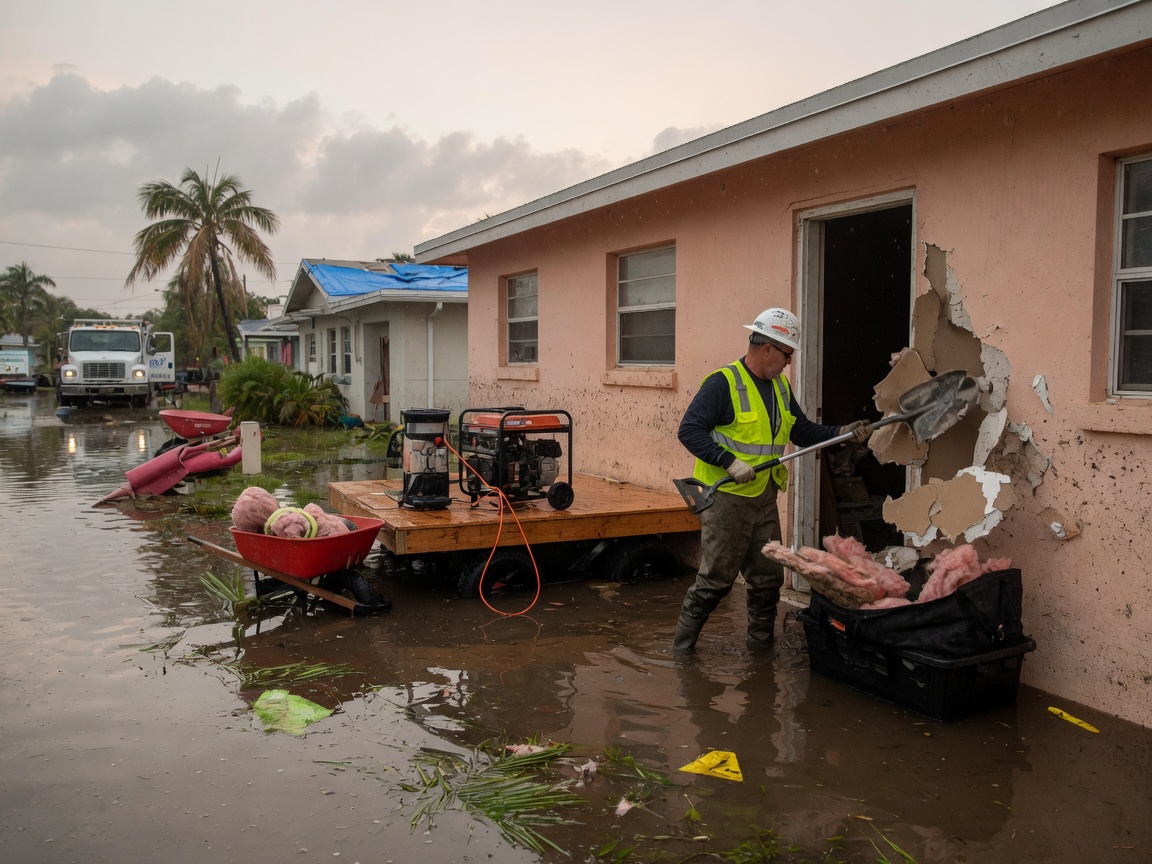
Flood Repair Miami provides water damage restoration and mold remediation focused on the Miami Airport area (ZIP 33126). The neighborhood around Miami International Airport has a mix of older single-family homes in Miami Springs, small apartment blocks, airport-adjacent warehouses and light industrial buildings, and short-stay hotels. That variety means we bring equipment and procedures that fit slab-on-grade houses, concrete block apartments and commercial cargo spaces alike. Our customer hours are Mon–Fri 8am–6pm and Sat 9am–2pm for scheduling and onsite inspections.
Because Miami Airport area sits in Miami-Dade County’s tropical monsoon climate, hot wet summers bring sudden downpours and high humidity that accelerate water intrusion and mold growth. We prioritize rapid extraction and controlled drying to limit secondary damage in the compact parcels and often shallow foundations found here. Our crews plan access around airport traffic on Le Jeune Road and the Dolphin Expressway so we can get equipment in and out quickly for residents and businesses from Miami Springs, Virginia Gardens and nearby Hialeah.
Around miami airport area
We regularly work near:
- 📍Miami International Airport (MIA)
- 📍Le Jeune Road (NW 42nd Avenue)
- 📍Dolphin Expressway (SR‑836/Dolphin)
- 📍Glenn Curtiss Mansion (Miami Springs)
- 📍Miami Springs Senior High School
Water Damage Restoration in miami airport area — Local Notes
- •Housing stock: many homes near the airport are older concrete block or mid-century frame houses (especially in Miami Springs) and short-stay hotel buildings; these require different demolition and drying approaches than newer slab or wood-framed houses.
- •High water table and drainage: shallow groundwater and limited yard grading around the airport mean standing water can linger after heavy rains, requiring sub-slab drying or thorough moisture mapping.
- •Access and logistics: equipment delivery often routes via Le Jeune Road (NW 42nd Ave) or the Dolphin Expressway (SR‑836); some cargo/airside properties require coordination for loading zones and gate access.
- •Weather exposure: hot, humid summers with sudden tropical downpours speed mold colonization—fast moisture removal and dehumidification are essential to stop mold remediation from becoming extensive.